The movie Mel Brooks called a “miracle of the firstborn”
 Posted On
(Credits: Far Out / TCM)
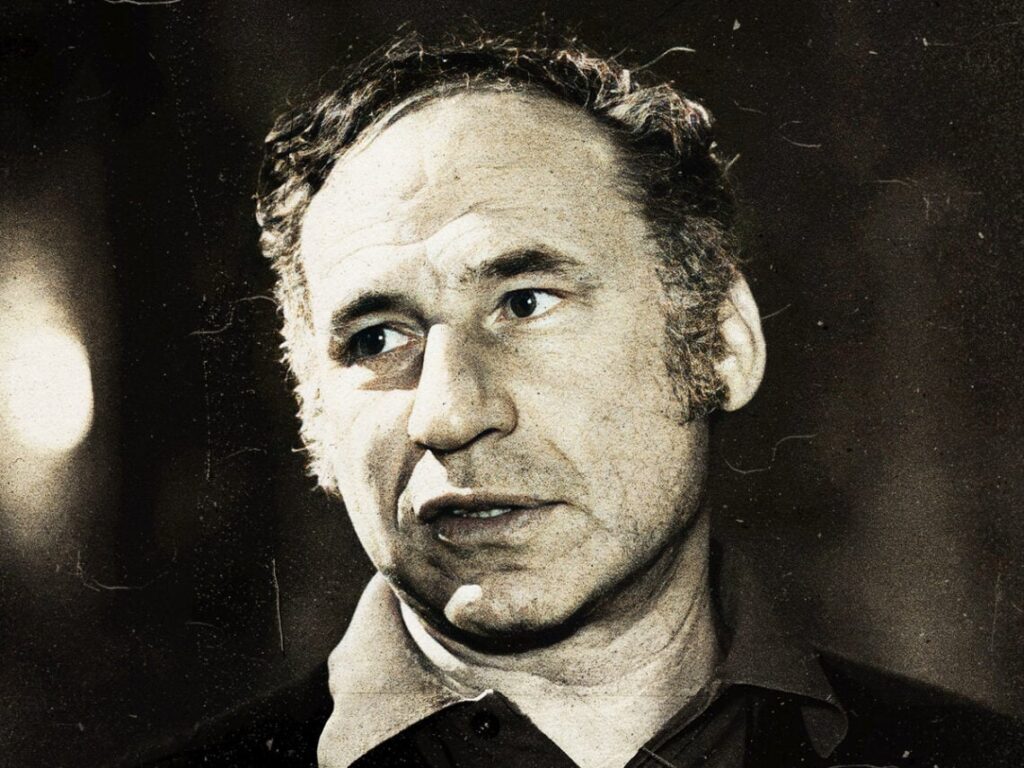
In 2013, when an 86-year-old Mel Brooks was asked if there was one film in his career he was proud of above and beyond all the others, there was only one answer.
The story of this movie, which Brooks dubbed a “miracle of the firstborn”, goes back to 1962, when a funny title popped into his head: ‘Springtime for Hitler.’ He didn’t have any kind of story attached to this title, but a few years later, an idea came to him for a tale of two Broadway producers who intentionally swindle their financial backers by making a play designed to flop. Suddenly, the two notions slammed together in his mind: the play would celebrate Adolf Hitler and the Nazis, and the film itself would be called Springtime for Hitler.
At this point in his career, Brooks was a superstar in TV comedy and on the stage, but he’d never written or directed a movie. So, he first began writing Springtime for Hitler as a novel, which morphed into a stage production, and finally into a screenplay. By the time he was ready to shop a 30-page film treatment around Hollywood, though, he soon discovered that a movie celebrating the man who is a societal byword for evil incarnate was a tough sell, even within the context of satire.
To his eternal frustration, major movie studios and indie producers alike told Brooks his idea was tasteless, no matter how vigorously he insisted the idea was to tear Hitler down to size by making fun of him and Nazi Germany. “I was never crazy about Hitler,” Brooks told CNN in 2001 with characteristically hilarious understatement. “If you stand on a soapbox and trade rhetoric with a dictator, you never win.” However, he felt, “If you ridicule them, bring them down with laughter, they can’t win. You show how crazy they are.”
After a huge number of doors were slammed in his face, Brooks finally managed to find a receptive audience in New York producer Sidney Glazier. He reportedly laughed so hysterically at Brooks performing the story in his office that he exclaimed, “We’re gonna make it! I don’t know how, but we’re gonna make this movie!” Eventually, Glazier struck a deal with Joseph E Levine of Embassy Pictures, who would handle distribution and foot the bill for half the film’s $1million budget.
However, he’d only do it under one condition: Springtime for Hitler couldn’t be the title, because it would cause too much of a furore. Seeing that the opportunity to make his feature film debut was finally being dangled in front of him, Brooks chose to abandon the title that had kicked off the entire process. He renamed it The Producers, and the rest, as they say, is comedy history.
To Brooks, it was a miracle that he managed to get The Producers made as his first film, despite not really knowing what he was doing. In fact, he made a ton of mistakes as a first-time director, and the shoot was stressful at times, but he emerged with a comedy classic. Or, at least, he thought he did – until the movie opened to several scathing reviews. Suddenly, his miracle firstborn “was almost killed in childbirth by The New York Times. Renata Adler, she stuck a half of a scissor in my neck and gave me one of the worst reviews.”
This negativity, and some middling box office, had Brooks wondering if he’d made a mistake, and The Producers wasn’t as good as he thought. Thankfully, the critical tide eventually started to turn around a month after the newspapers had torn him a new one, which he saw as another miracle taking place. “The magazines… came out and they saved me,” he concluded. “And they saved my confidence in myself. I knew I could make a funny movie.”
[embedded content]
Related Topics