Why The Clash didn’t want their music described as “political rock”
 Posted On
(Credits: Far Out / Alamy)
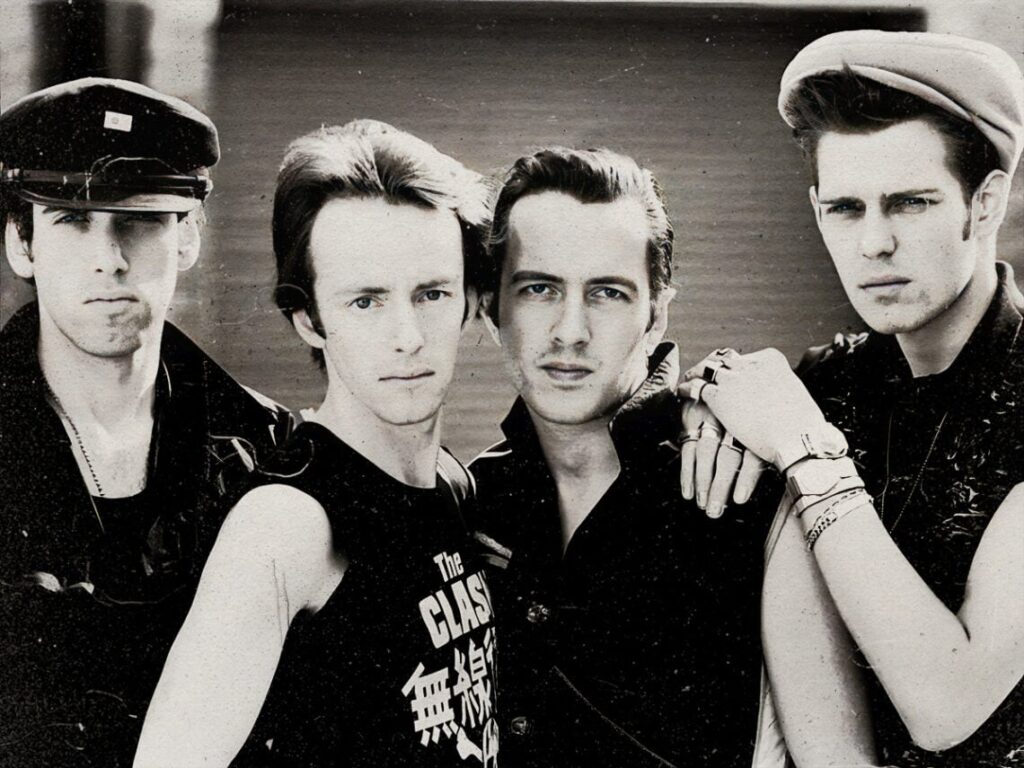
When we decry the lack of protest songs and political engagement in today’s popular music, The Clash are often the group we have in mind as proof of concept for the higher-minded approach. They were, after all, quite famously, the “only band that mattered”.
Turns out, though, that even at the height of their powers back in 1979, the members of The Clash weren’t sounding super pleased about that responsibility, nor eager to grab the mantle as punk rock’s official political spokesmen.
“We always go on the defensive when confronted with this political stuff,” frontman Joe Strummer told reporters in Los Angeles during a press junket in May 1979, in between the release of the band’s second album, Give ‘Em Enough Rope, and their magnum opus, London Calling.
“Our politics is spelled with a small ‘p’,” he noted, further clarifying that The Clash wanted to feel free “to move in any direction we want, including a political direction. But if everyone is saying, ‘Ah, you’re a political band…’ then it’s a trap, a hole to get shut up in”.
It’s easy to forget that Strummer was just a 26-year-old kid at this point, and that he’d already seen much of the initial energy of the punk movement flame out in the span of a few years. He was rightfully trying to be a bit more careful about what he hitched his wagon to and how his band were perceived. The messaging needed to be up to them, particularly when reporters and politicians were more than happy to slap a label on them for easily digestible sound bites.
“I wouldn’t call [our music] political rock,” added guitarist Mick Jones, “It’s just contemporary rock and roll with contemporary lyrics. The songs are just devoted to making people think about their situation. You could call it ‘attitude rock’. The people who purport to have political answers are generally full of shit.”
It could be argued that The Clash only became more politically minded and motivated heading into the 1980s, so their hesitation or borderline dismissal of the idea here is at least a little surprising. The real issue might just be semantics, though. Political is a loaded word with a lot of baggage attached. Strummer’s father, who abandoned him at a young age, was a professional diplomat himself, so there was certainly going to be some cynicism baked in when it came to entering the political arena himself.
Bassist Paul Simonon, who admitted to finding politics “quite boring”, tried to explain his band’s anti-political but cause-focused music in more of a historical context. “What we’re doing is similar to the hippies,” Simonon said, invoking a comparison that would have been self-sabotage for a punk band a couple of years earlier, “because we’re protesting certain things. But it’s not peace and love now, it’s hate and war, and we’re pointing at the same thing as it really is. We’re like the revenge of the hippies!”
[embedded content]
Related Topics