The song that Paul Simon used to mock Bob Dylan: “That was a drag”
 Posted On
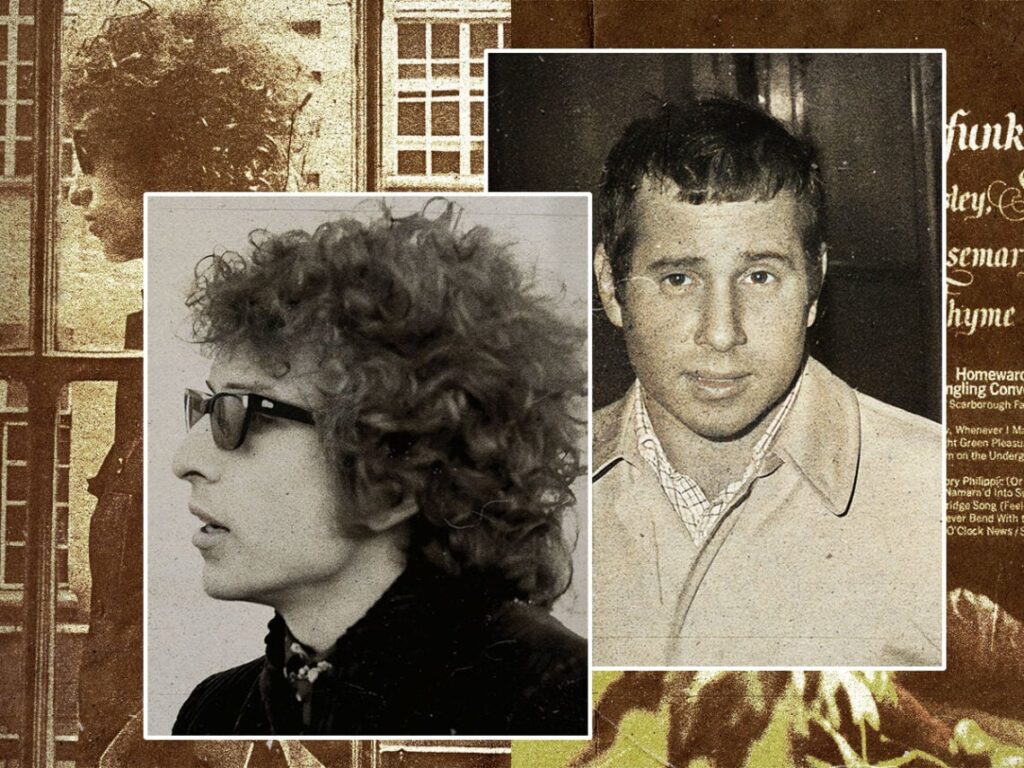
(Credits: Far Out / Bent Rej / Joost Evers. Nationaal Archief)
Perhaps the most pivotal influence behind Simon and Garfunkel was the American double act The Everly Brothers. When Paul Simon and Art Garfunkel began performing together as Tom and Jerry in the 1950s, like Don and Phil, they garnered plenty of attention for their smooth vocal harmonies. However, over time, Simon and Garfunkel became increasingly associated with the folk revival scene.
Following his teenage fascination with folk music, Bob Dylan moved from his home state of Minnesota to New York City in the early 1960s. Here, he began playing on the coffee shop folk circuit and even befriended his idol, Woody Guthrie, who was sadly dying from congenital Huntington’s disease at the time. After breaking through with his 1963 album The Freewheelin’ Bob Dylan, Dylan enjoyed a firm global fanbase centred in the Big Apple.
Among Dylan’s early fans was Simon, who took a shine to the troubadour’s unique knack for songwriting. While Simon prospered with vocal advantages over Dylan, he and Garfunkel could appreciate the young singer’s unique delivery style. Something in the timeless timbre of Dylan’s voice could frame poignant songs like ‘Masters of War’ and ‘Blowin’ in the Wind’ like no other.
Though Dylan’s early work influenced Simon and Garfunkel in their 1964 debut album, Wednesday Morning, 3 A.M., his songwriting nuances were more palpable in the follow-up album, Sounds of Silence. Above all else, the album is remembered for its titular single, which crucially gained the pair a record deal with Columbia. Inspired by Dylan’s recent embrace of folk rock, as exhibited in Bringing it All Back Home and Highway 61 Revisited, Simon recorded the popular ‘Electic Version’ of ‘Sound of Silence’.
Furthermore, ‘The Sound of Silence’ was a significant leap forward in Simon’s lyrical canon to date. At the time, he was proud of his work on the lyrics, but soon outgrew his success, later stating, ”It’s a young lyric, but not bad for a 21-year-old.”

Even at the time, Simon was dubious about the electric version but grew to appreciate its progressive edge. “Paul was horrified when he first heard it … [when the] rhythm section slowed down at one point so that Paul and Artie’s voices could catch up,” Simon’s friend and collaborator Al Stewart recalled in Paul Simon: A Life.
Although Simon owed much to Dylan’s pioneering presence in the mid-1960s, he eventually developed a mild aversion rooted in envy. “I usually come in second to [Dylan], and I don’t like coming in second,” Simon told Rolling Stone in 2011. “In the beginning, when we were first signed to Columbia, I really admired Dylan’s work. ‘The Sound of Silence’ wouldn’t have been written if it weren’t for Dylan. But I left that feeling around The Graduate and ‘Mrs Robinson’. They weren’t folky anymore.”
Despite Simon’s more technically proficient vocals, he believed that his voice put him in second place to Dylan’s first. “One of my deficiencies is my voice sounds sincere,” Simon added. “I’ve tried to sound ironic. I don’t. I can’t. Dylan, everything he sings has two meanings. He’s telling you the truth and making fun of you at the same time. I sound sincere every time.”
In 1966, Simon tried to adopt Dylan’s vocal approach in two prominent tracks, ‘Homeward Bound’ and ‘A Simple Desultory Philippic (Or How I Was Robert McNamara’d Into Submission)’. Simon discussed the former as a regretful ploy to pander to Dylan fans. “The job of a folk singer in those days was to be Bob Dylan,” he explained. “You had to be a poet. That’s what they wanted. And I thought that was a drag.”
The latter, appearing on the Parsley, Sage, Rosemary and Thyme, once again heard Simon adopting a Dylanesque vocal. This time, the songwriter had a little venom on his tongue. In the lyrics, Simon criticised his former idol. “Not the same as you and me, he doesn’t dig poetry / He’s so unhip when you say Dylan / He thinks you’re talking about Dylan Thomas, whoever he was,” Simon sings.
Was he mocking Dylan?
At the time of the song’s release, Dylan was seen as a literary genius who was graced with an intellect that separated him from every other singer-songwriter. Despite The Beatles being the biggest band in the world, even they were jealous of the masterful skill possessed by Dylan, and he was viewed as an untouchable figure.
It would take an exceptionally brave individual to dare take a shot at Dylan, but Simon and Garfunkel were not ones to shy out of a challenge. Although most wouldn’t have dared to go toe-to-toe with Dylan, the New York duo couldn’t resist from poking fun at the god among men.
Although there’s no denying that Simon went out to mock Dylan on the track, the singer-songwriter has always maintained that it was intended as a satirical exploration of his artistry rather than a vicious assault on one of his biggest musical heroes. Nevertheless, ‘A Simple Desultory Phillipic’, captures a momentarily lapse of his gentile image.
Did Paul Simon and Bob Dylan get along after?
Whether this song put things into an ice bath or not is unknown, but the two men didn’t enjoy a very good relationship. Dylan would apparently scoff at Simon during a performance one night and begin a feud that seems to have lasted decades. Not the kind of brutish tbaloid feud, but a subtextual and quiet anger.
Even though Dylan would have no part in Simon’s music at the time, he did at least come around to one song, covering ‘The Boxer’ for his album Self Portrait. On the other hand, given how Dylan was intentionally trying to sabotage his career on this record, covering a Paul Simon song to get the job done may have been his way of musically twisting the knife.
[embedded content]
Related Topics
The Far Out Bob Dylan Newsletter
All the latest stories about Bob Dylan from the independent voice of culture.
Straight to your inbox.