The pivotal importance of Van Morrison’s father in the future of Irish music
 Posted On
(Credits: Far Out / Sony Music)
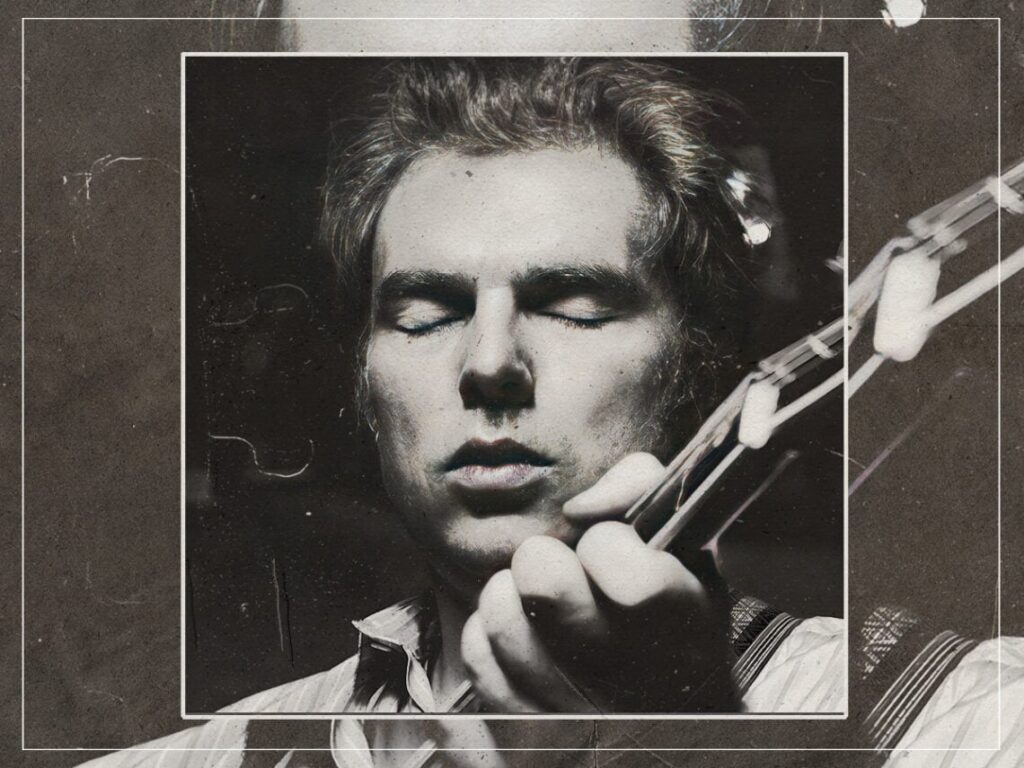
While his legacy may have taken a knock of late, singer-songwriter Van Morrison remains a much-loved, albeit cantankerous, national treasure.
He’s busy too. Boasting a decades-long celebrated songbook behind him, Morrison dropped his sixth album of the 2020s in June with Remembering Now. His 47th studio effort, its warm critical reception, coupled with his soundtrack work for Kenneth Branagh’s Belfast in 2021, helped to distract his fans and the music world from his cranky and paranoid Latest Record Project, Volume 1, a double LP boomer meltdown of yelling at the clouds of lockdown and vaccines within its dreary tirade.
Yet, Morrison could have dropped a whole album anthology of anti-vaxx conspiracies. For many, he’ll always be the genius who gifted the world ‘Brown Eyed Girl’, Astral Weeks, and the cherished It’s Too Late to Stop Now live album, garnering a level of adulation from his fanbase that’ll forever eclipse his later creative and political deadends.
For a moment, Morrison found himself representing Northern Ireland during the British invasion’s peak. Having founded the scuzzy R&B group Them in 1964, their thrashing ode to young lust, ‘Gloria’, would penetrate the American garage scene, enamoured with the new crop of UK acts dominating the Billboard charts—initially a B-side to ‘Baby, Please Don’t Go’, ‘Gloria’ would take on new life with Patti Smith’s sacred reinterpretation for 1975’s Horses.
Like many artists, Morrison’s key foundational influence was his family home. Growing up in Bloomfield’s working-class Protestant Hyndford Street in East Belfast, the Morrison household held a glowing reputation in the neighbourhood for his father George’s extensive record collection. A shipyard electrician, he had spent time in the USA, bringing back records that were otherwise highly sought-after imports of the day. Surrounded by music, the young Morrison was exposed to a rich variety of artists across folk, blues, gospel, and country that would inform his later eclecticism.
The musician would later name-check the records spun in the family home by Ray Charles and Solomon Burke as ultimately responsible for assuring his path to music, telling Rolling Stone in 2005, “If it weren’t for guys like Ray and Solomon, I wouldn’t be where I am today. Those guys were the inspiration that got me going. If it wasn’t for that kind of music, I couldn’t do what I’m doing now.”
It was the intrepid record rifling from the US’ far-flung music stores that had paved the way for Morrison’s budding musicianship, finally cemented with his gift of an acoustic guitar at 11, with The Sputniks skiffle group recruitment the following year. Before long, Morrison was touring Europe with The Monarchs showband six years on.
Until punk’s arrival, Morrison virtually single-handedly stood as the Irish province’s sole pop ambassador, eventually pulled to London with Them, then New York to record his Astral Weeks. The Morrison mythos was born. Along the way, those early years listening to exotic and alien records from the USA’s cultural glow proved foundational to his trajectory, guided by the expert curatorial tastes of his seafaring father.
[embedded content]
Related Topics