The Jean-Luc Godard movie Wim Wenders called “one of the greatest films ever made”
 Posted On
(Credits: Far Out / Alamy)
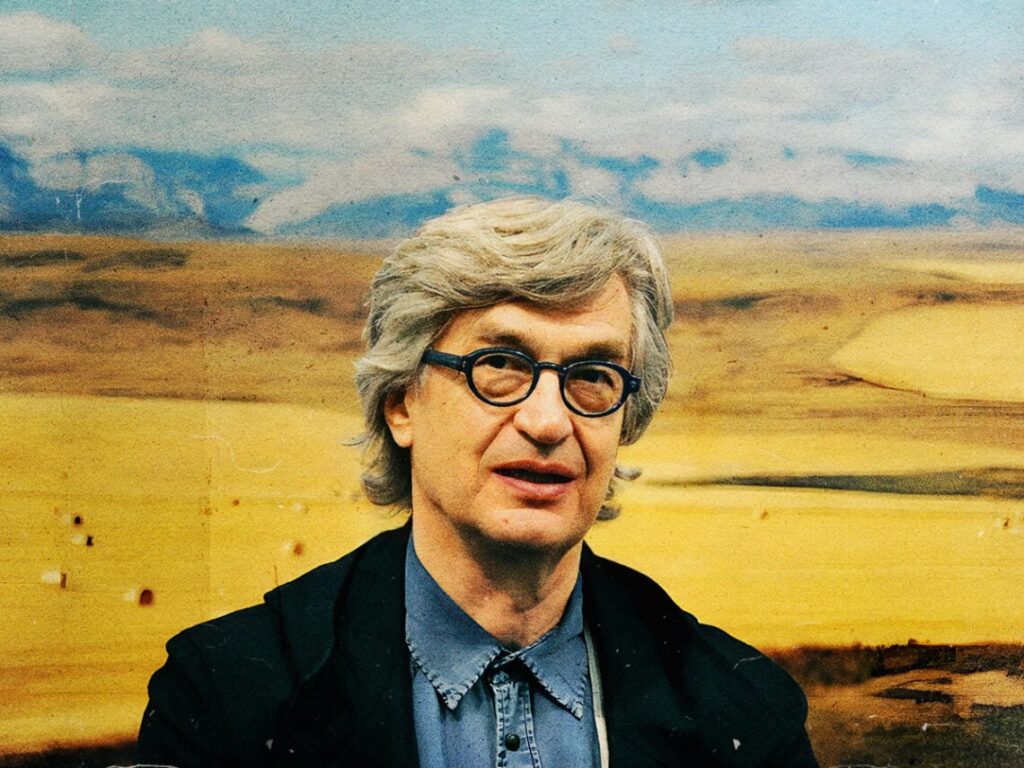
If there’s anyone who’s earned the right to chat about the greatest films ever made, it’s Wim Wenders. Since he first stepped behind the camera in the late 1960s, he’s knocked out more than a few unforgettable gems – each one a testament to just how deeply he gets cinema, right down to its smallest quirks and complexities.
In the 1970s, Wenders focused on road movies, where journeys across countries and long expanses of tarmac became a symbol of his characters’ metaphysical transformations. Introspective and deeply concerned with the human experience, especially from the point of view of characters reckoning with their own sense of identity and place in the world, Wenders’ films dug deep into the internal world that we often struggle to make sense of.
While the decade saw him make a Road Trilogy, when the 1980s rolled around, his penchant for journeying hadn’t gone anywhere, resulting in his great masterpiece Paris, Texas. It acted as a modern take on the western genre from the eyes of a foreigner (Wenders is German), capturing a world where America isn’t paved with gold, but dust and uncertainty.
From Wings of Desire right through to his more recent Perfect Days, Wenders has firmly planted himself as a master of thoughtful, quietly affecting cinema. But he didn’t get there in a vacuum. A whole host of films helped shape how he sees the world – not just behind the camera, but in life full stop. One figure who’s clearly never strayed far from Wenders’ creative compass is Jean-Luc Godard, the trailblazing French New Wave filmmaker who blew the doors off cinema in the ’60s with boundary-pushing gems like Breathless and Masculin Féminin.
His work, like it or not, was groundbreaking. It was playful but also political, experimental but wholly watchable with his fast-cuts and fourth-wall breaks, creating an almost interactive sensibility. Wenders was captivated by this new era of cinema when he was young and starting to take an interest in filmmaking himself.
He once told A.frame about his love for Contempt (Le mépris), explaining, “It is an incredible film in scope and shows Godard at his best. It’s a heartbreaking film with Brigitte Bardot and Jack Palance,” adding, “Le mépris has amazing acting, is very free and loosely edited, and is a wonderful movie about filmmaking. For me, having Fritz Lang in there is just unbelievable to watch.”
But there’s one Godard film that Wenders once went as far as to call “one of the greatest films ever made,” a bold yet not totally unreasonable claim. “That period of his life, he was cranking out the greatest movies one after another every year,” Wenders explained to Criterion.
He was talking about Vivre sa vie, Godard’s powerful portrait of a young woman named Nana, who walks away from the quiet life she’s built in hopes of chasing an acting career – only to find herself slipping into hardship, sex work, and, eventually, tragedy. With Anna Karina front and centre, Godard strings together a series of striking vignettes that capture Nana’s restless yearning for freedom – something that, heartbreakingly, never quite lands in her lap.
It’s a gorgeous film, shot in stunning black-and-white, and it gave us some of Godard’s most powerful scenes, like Karina crying in the movie theatre as she watches The Passion of Joan of Arc. It’s no wonder Wenders loves the film, which explores the plight of Nana’s life with depth in a similar way to his own interest in those characters searching to find happiness in their existence.
[embedded content]
Related Topics