The fearless director who inspired Quentin Tarantino’s on-screen violence: “Led by example”
 Posted On
(Credits: Far Out / Alamy)
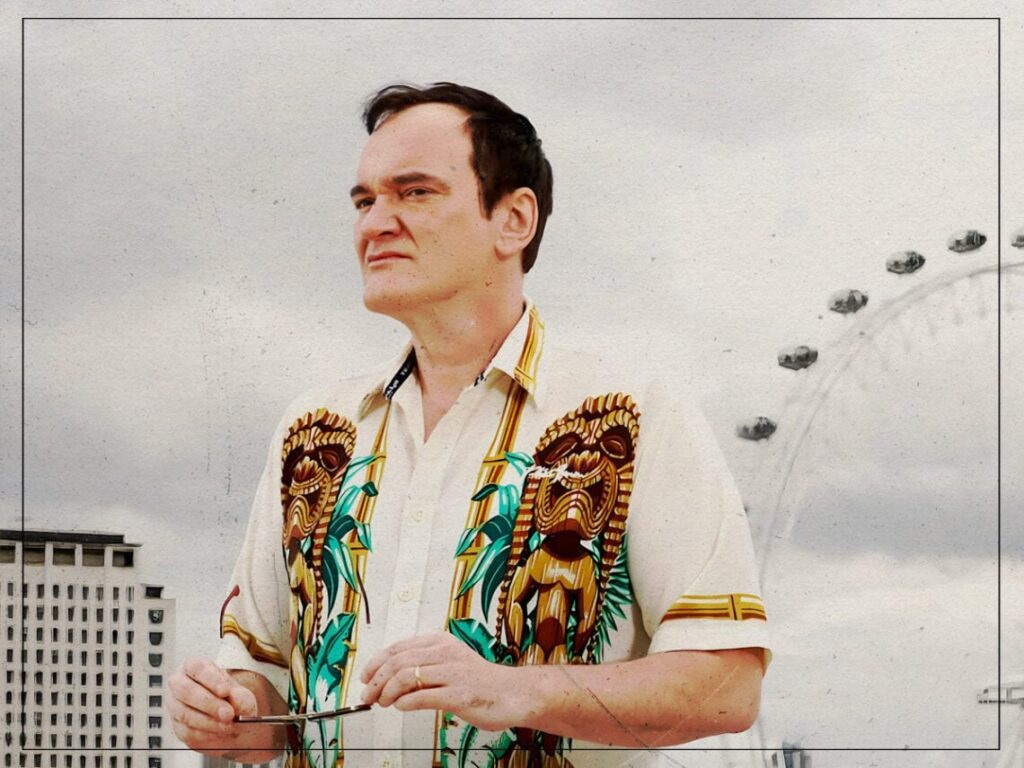
Outside of his repeated penchant for lovingly crafted shots of feet, the filmography of Quentin Tarantino has hardly been defined by eroticism, or at least his interpretation of it. And yet, a classic erotic thriller served as the major inspiration behind how the filmmaker approached his depictions of on-screen violence, something that’s seen him celebrated and condemned in equal measure.
Whenever Tarantino releases a new movie, there are certain stylistic and aesthetic flourishes audiences have been conditioned to expect in the decades since Reservoir Dogs announced his arrival. There’s going to be needle-drops, pop culture references galore, rat-a-tat dialogue between bickering friends and enemies, no shortage of profanity, and at least one scene of jarring violence.
While Tarantino has always worn his influences on his sleeve by paying homage to his favourite features, songs, soundtracks, and directors throughout his career, Pedro Almodóvar’s 1986 effort Matador was named in his book Cinematic Speculation as the perfect example of the films he envisioned himself making. He said: “I remember when I worked at my Manhattan Beach video store, Video Archives, and talked to the other employees about the types of movies I wanted to make, and the things I wanted to do inside of those movies. And I would use the example of the opening of Almodovar’s Matador. And their response would be, ‘Quentin, they won’t let you do that.’ To which I replied back, ‘Who the f*ck are ‘they’ to stop me? ‘They’ can go f*ck themselves.’”
Matador stars Antonio Banderas as a would-be purveyor of the titular profession who studies under the tutelage of Nacho Martínez’ Diego Montez, a famed matador forced to retire following a goring incident that’s now turned his hand to teaching the next generation. Banderas’ Angel turns himself in to the authorities following an attempted sexual assault, but not before confessing to a string of killings he claims to have experienced in psychic visions. With a lawyer called in to defend him, suspicions arise as to whether or not he’s the real culprit.
Almodóvar may have named Matador as one of his two weakest movies in his own estimation, alongside 1993’s Kika in his self-penned Almodóvar on Almodóvar, but the impact it had on a young Tarantino remains undeniable: “At the right age (mid-20s), and at the right time (the fucking 1980s), the fearlessness demonstrated by Pedro Almodóvar led by example.”

Expanding on his appreciation of Matador’s “fearlessness”, Tarantino deemed it to be a breath of fresh air compared to what was happening in American cinema at the time, with the auteurs of the 1970s being subsumed by the studio system: “As I watched my heroes, the American film mavericks of the seventies, knuckle under to a new way of doing business just to stay employed, Pedro’s fearlessness made a mockery of their calculated compromises. My dreams of movies always included a comic reaction to unpleasantness, similar to the connection that Almodovar’s films made between the unpleasant and the sensual.”
He’s not the only director to have inspired Tarantino’s penchant for violence, and during a conversation with his hero Brian De Palma, the filmmaker effused about his work, “Brian’s been dealing with violence for the last 15 years.”
“As a filmmaker, when you deal in violence, you’re actually penalised for doing a good job,” says Tarantino, paraphrasing a quote from his idol. “Absolutely,” De Palma replies, knowingly bowing to the new kid on the block.
De Palma succinctly wraps up the conversation with a simple yet effective line, “Cinema is, as we’ve said a thousand times, is a visual medium and we’re interested in terrific visual sequences and many of them happen to be violent.” It’s something Tarantino clearly agrees with. “I know people who could’ve seen Reservoir Dogs and could’ve been fine with it,” says Tarantino. “But when they hear ‘violence, violence, violence’… they talked about Reservoir Dogs as the most violent movie ever made. Now, someday, I may make the most violent movie ever made and I wouldn’t mind people saying it. But I didn’t.”
The respective back catalogues of Almodóvar and Tarantino may not possess many similarities on the surface, but the former’s fifth feature nonetheless ended up having a profound say on one of Hollywood’s most notable creative minds.
[embedded content]
Related Topics