The classic Deep Purple song Ritchie Blackmore called a complete “joke”
 Posted On
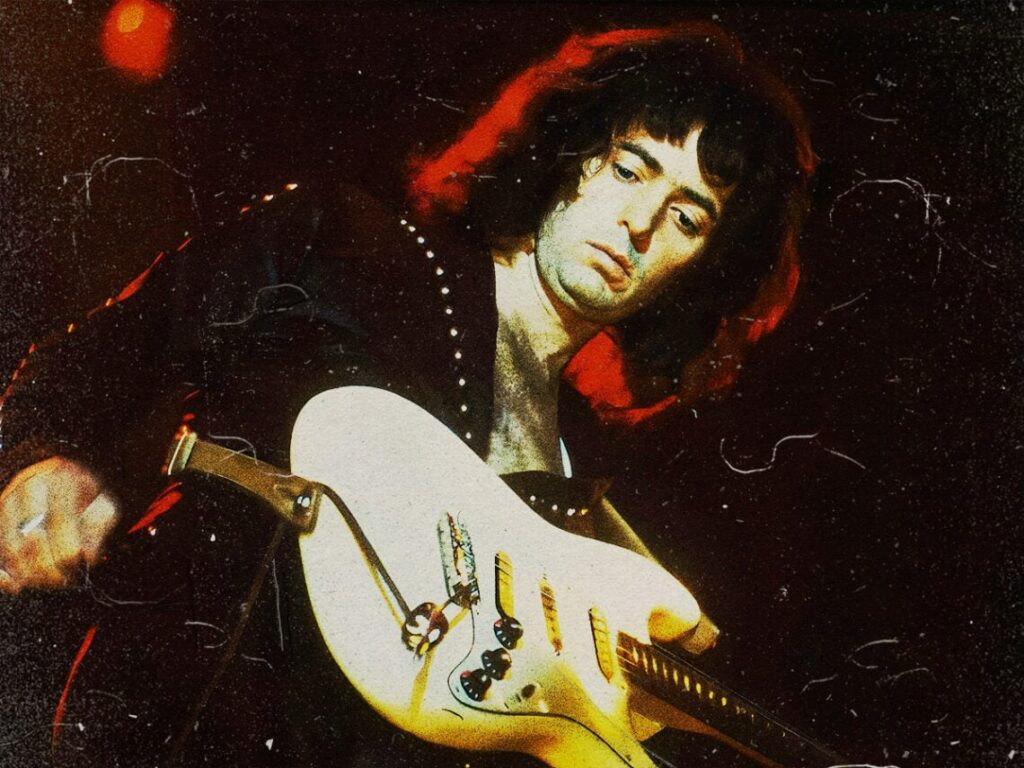
(Credits: Far Out / Alamy)
Like many legends who arrived during the golden age of British rock ‘n’ roll, Ritchie Blackmore is one of the most outspoken figures out there.
Despite rising to the top like many of his guitar-playing peers, Blackmore has a specific view of what true virtuosity looks like, and there’s nothing that irks him more than when a band or act masquerades as such, only to find, underneath, it’s all mere pretence. For instance, he once said he didn’t really appreciate Cream that much because he felt that Eric Clapton was copying other players most of the time.
He said something similar about The Rolling Stones, too, expressing his disdain about how they were just “a nick from Chuck Berry riffs”. Of course, Blackmore isn’t exactly unique in thinking that the Stones were nothing more than rhythm and blues copycats, but it seemed as though he felt that what they were imitating wasn’t all that worthwhile in the first place.
Mainly, Blackmore struggles with what most veteran players struggle with – authenticity. This becomes especially prominent when it’s a band, act, or movement that gains mass popularity or attention, which is usually a red flag that makes Blackmore sceptical about whether they actually have anything in proportion to all the hype.
When the punk movement took flight, for instance, Blackmore didn’t really see all that much talent going on, witnessing many of his peers feeling inspired by the whole thing and wondering why he didn’t feel the same excitement. But when it came down to it, he realised he already knew why. He also felt that the music itself was pretty poor, hinging on basic music principles to pass as something better than it actually was.
As he said in The Ritchie Blackmore Story, “The editor of Melody Maker, the big paper in England, was saying how wonderful the music was. Ian [Anderson] was stunned, like, ‘Are you joking? This is awful. Dreadful stuff.’ And, of course, I tended to agree.”
Suppose that it’s no surprise, therefore, that Blackmore eventually came for his own territory, Deep Purple. Most rock band breakups in history are filled with stories of immense frustration, disagreements and fallouts, and Deep Purple was no different. Blackmore especially wanted them to go in a different direction, and eventually left because he felt his talents were best placed elsewhere.
Blackmore never really shied away from honesty when it came to Deep Purple, even their more popular or well-regarded periods, and often these criticisms seemed to come from a place of superiority, even though it’s also a pretty commonly accepted observation that most of the greatest Purple songs would be nothing without Blackmore anyway.
Still, Blackmore felt that their classic, ‘Child in Time’, was a great track originally, but that it was ruined by Ian Gillan’s vocals when they reunited in the 1990s. “Musically, everything was great, but the singing thing was just a joke,” he told Record Collector. “It was a pantomime, and Ian would take the piss out of the audience. He would just not sing or forget the words, and he loved it. It was like, ‘I can’t do anything wrong,’ and I was thinking it wasn’t fair to the audience.”
This was made worse by the fact that, to Blackmore, ‘Child in Time’ was the most important song of the night. And he knew that Gillan could smash it when he did it well – but most of the time, he either utilised the wrong technique or omitted it completely because of how vocally demanding it was. Which, in turn, was entirely frustrating for Blackmore, who knew how magical it could be.
[embedded content]
Related Topics