The band who compared Arctic Monkeys to The Backstreet Boys
 Posted On
(Credits: Raph Pour-Hashemi)
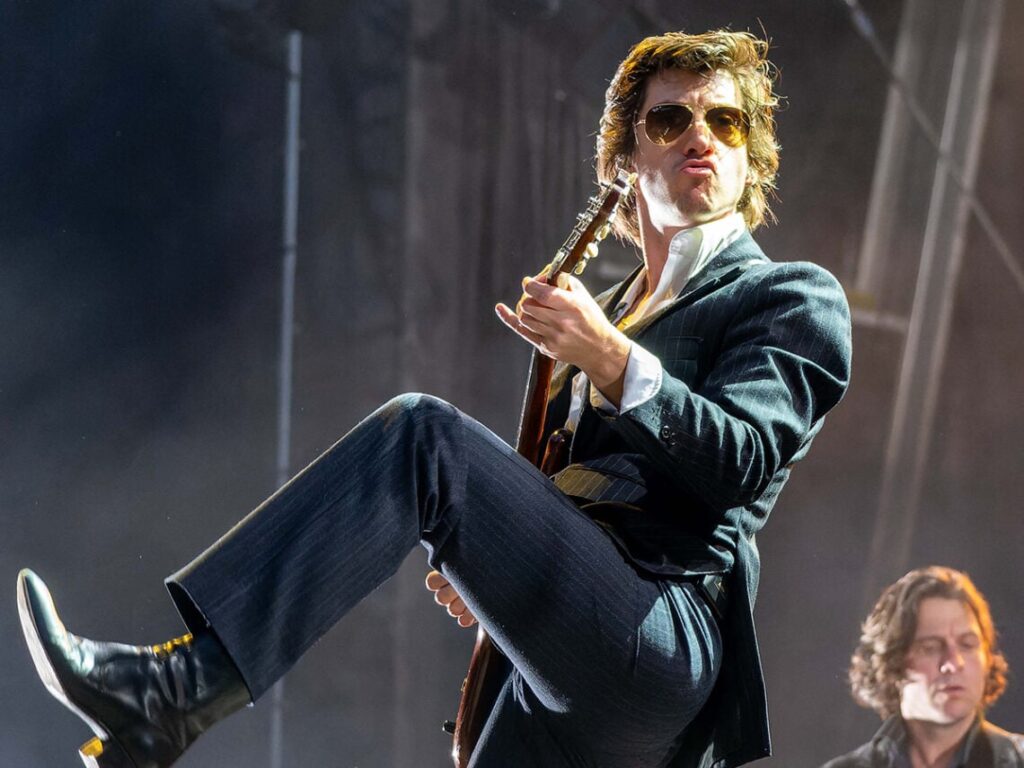
From scruffy-haired delinquents to motorbike-straddling rock gods, Arctic Monkeys’ seminal AM record was a clear turning point for the band. While their previous four records had thrust them into relative mega-stardom, their fifth record was their commercial North Star.
While to many, including myself, they’ve crafted more interesting sonic landscapes in their other records, AM is arguably the most important record of their career in measuring their popularity. It took them from the gritty paving slabs of alternative Britain and put them in the depths of LA’s seedy expanse, wearing aviators and Cuban-collared shirts with relative ease.
The genesis of that evolution came from the band’s new-found sense of studio exploration. Instead of recording the songs as live takes, they experimented with the textural possibilities of the studio. Recalling the process, Turner said to Under The Radar: “All of the songs that are on there are in their fourth or fifth incarnation. There was a lot of trial and error. It’s like a chemical reaction. You pour in all these elements from your musical spectrum or universe, and if you get a little too much of one and not enough of the other, you don’t get the bang or the color of smoke that you want from the reaction. So then you have to start it all over again and wash the test tubes out and try to get the balance right”
He continued “I think that was even more so for this record because some of the elements are coming from corners of our musical universe that we’ve perhaps talked about being fans of but haven’t necessarily worn as influences on our sleeves. There’s definitely a contemporary R&B vibe to some of the melodies, and there’s still a ‘70s rock and roll thing”.
The excitement of developing something fresh and innovative in the studio was undoubtedly a confidence builder, and it bled into the band’s live performances in the tour that followed. While the album came out in the following September, their 2013 Glastonbury performance featured a slick-haired and suit-wearing Turner who played tracks from the upcoming album with an Elvis-like swagger.
Soon after, they embarked on a mammoth world tour that will arguably go down as their most iconic. It was a band fully immersed in the slipstream of their success, experiencing that lightning-in-a-bottle moment where their record and live show align perfectly, and a sea of enraptured fans soak up every note in every live show.
Despite our levels of hysteria, surely we aren’t blind to the fact that such success is rooted in deep levels of rehearsal and consistency. A great show makes you feel like you’re witnessing something special of course, but I’m not naive enough to think the night after can’t be just as good.
But The Orwells, who supported them on their US leg of the tour thought differently. In fact, as they watched the Sheffield four-piece from the side of the stage, they began to resent not only their consistency but their overall genre-bending approach. In an interview with DIY they said:
“They try and mash together genres. [They’re] kind of like the hip Backstreet Boys or something… the set list was always the same. If you saw the show once, you saw every show that they played. I mean, we learned lessons from good things that they did, but then also – let’s not fucking do that.”
When asked about his take on the accusations, Turner doubled down on his rockstar method acting and provide a simple but cutting response: “They should have been out trying to get laid instead of watching us every night.’
More sincerely, he continued “I don’t think that’s fair [to call it synchronised]. There comes a time on a tour when something works and you tend to leave it alone. We have been changing it around a little bit” he said. “You can’t mess around with it too much. It’s almost like the show isn’t designed to be watched by the same person every night. Nowadays, people share the setlists, but I’m by no means fucking phoning it in. It’s not like we have [pre-recorded] tracks, we’re up there fucking doing it.”
While the two bands engaged in a war of words, the history books have decided who emerged victorious. But regardless of whose side you agree with, an underlying sentiment that has existed since the beginning of art reared it’s ugly head. With growing success and artistic evolution often comes discontent, or a fear that the sense of familiar comfort once provided by an artist has now been replaced for fearlessness.
[embedded content]
Related Topics