Motown to MDMA: How northern soul influenced rave culture
 Posted On
(Credits: Far Out / Wigan Casino / Original Promo)
Sweaty clubs, sticky floors, and pupils the size of dinner plates; nightclub culture has changed so much from its early days, but in many other ways, it has remained exactly the same. So much of modern club and rave culture takes its cues from the era of acid house and the second summer of love back in the late 1980s, but the roots of all-night dances, fueled by amphetamines and uptempo beats, stretch back long before the era of Thatcher and illegal raves. All roads lead to northern soul.
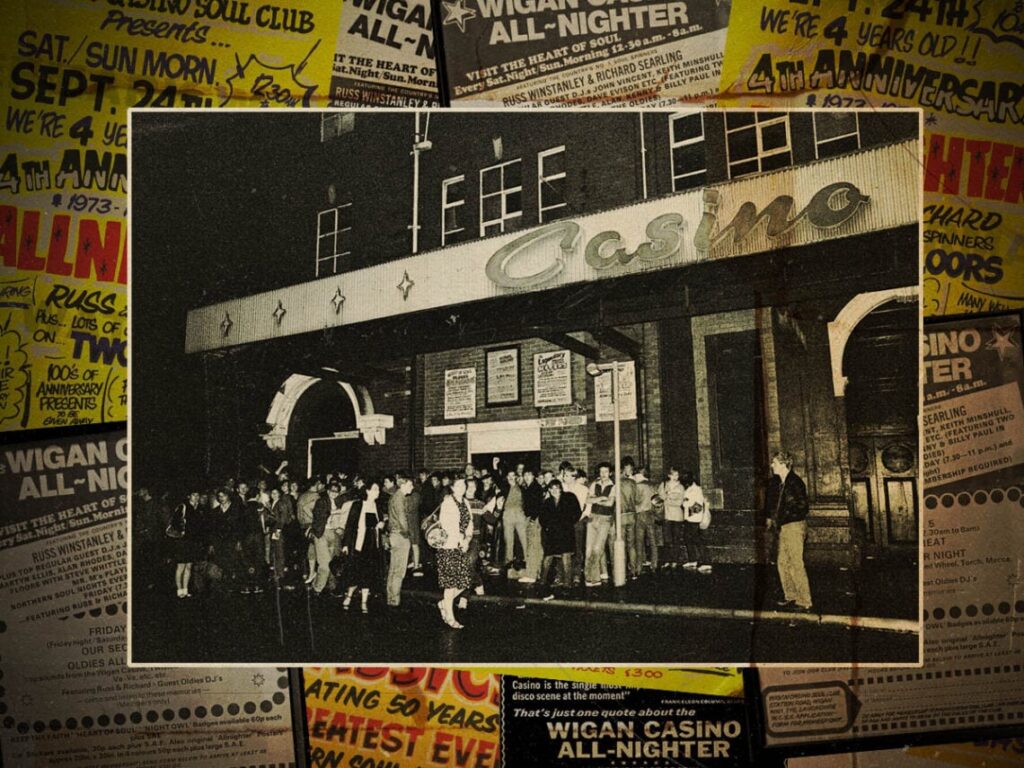
It was during the early 1970s that northern soul began to establish itself in the towns and cities of northern England. Taking its own influences from the emergence of mod nightclubs and late-night dances back in the 1960s, in places like Soho’s The Flamingo, legions of young people would dance all night long to overlooked, obscure, and forgotten American soul singles. This unexpected, enigmatic scene soon spread across multiple towns and provincial cities across the north, making places like Manchester, Wigan, and Blackpool havens for all-night dances.
Before too long, the presence of drugs – predominantly amphetamines – began to emerge in the northern soul scene, bringing a considerable degree of unwanted police attention to northern soul havens like Manchester’s Twisted Wheel. Amphetamines had previously been popular in the mod subculture of the 1960s, so it is no surprise that their popularity carried on into the northern soul scene – how else are you supposed to stay up all night dancing after finishing a shift at a factory?
By now, you should be able to see the comparisons between northern soul and the later development of rave culture during the 1980s. Not only did places like The Twisted Wheel and Wigan Casino pioneer amphetamine-fueled ‘all-nighters’, but the northern soul scene was also the first instance of audiences worshipping DJs rather than the musical artists themselves.
Northern soul DJs went to great lengths to find the most obscure, unheard soul tunes from America, and each DJ had their own unique specialities and sounds; something which was later replicated by acid house DJs, albeit with an incredibly different style of music. In fact, there were multiple instances of house DJs scratching off the song names and artists from the record labels so that others couldn’t copy their sound, evoking the ‘cover-ups’ of the northern soul age decades prior.
Even northern soul’s distinctive style of dancing bears a relation to the two-stepping dance moves of late-1980s rave culture. Prior to the emergence of soul all-nighters, most popular dances revolved around having a partner, but northern soul obsessives most often danced on their own, developing their own unique style of movement fueled by a deeply personal, spiritual connection to that beating soul rhythm. In turn, acid house ravers typically danced on their own, too, employing similar speed-styled footwork, although northern soul didn’t have any lasers to reach for.
Just as the acid house rave scene earned the ire of Thatcher’s government, who did their best to crack down on the dangerous premise of young working-class people enjoying themselves, northern soul was also targeted by the government and local authorities. Manchester’s Twisted Wheel is probably the most obvious example of this fact; the legendary club was repeatedly targeted by the police force in Manchester, supposedly for the presence of drugs. Eventually, under pressure from the police and local council, the club shut down, after a bizarre old law was invoked, which prevented all-night dances from being held. Some things never change.
The northern soul scene laid the foundations for virtually all future countercultural movements of music and dance, which is perhaps one of the reasons why northern soul still has such a colossal presence in the modern age. Over half a century on from the very first soul all-nighters, audiences up and down the nation are still getting their kicks out listening to obscure American soul records, dancing until the early hours, and worshipping the DJs that first discovered those otherworldly anthems.
[embedded content]
Related Topics
The Far Out Music Newsletter
All the latest music news from the independant voice of culture.
Straight to your inbox.