‘Looking Over From My Hotel Window’: The song every Yoko Ono doubter should hear
 Posted On
(Credits: Far Out / Apple Records)
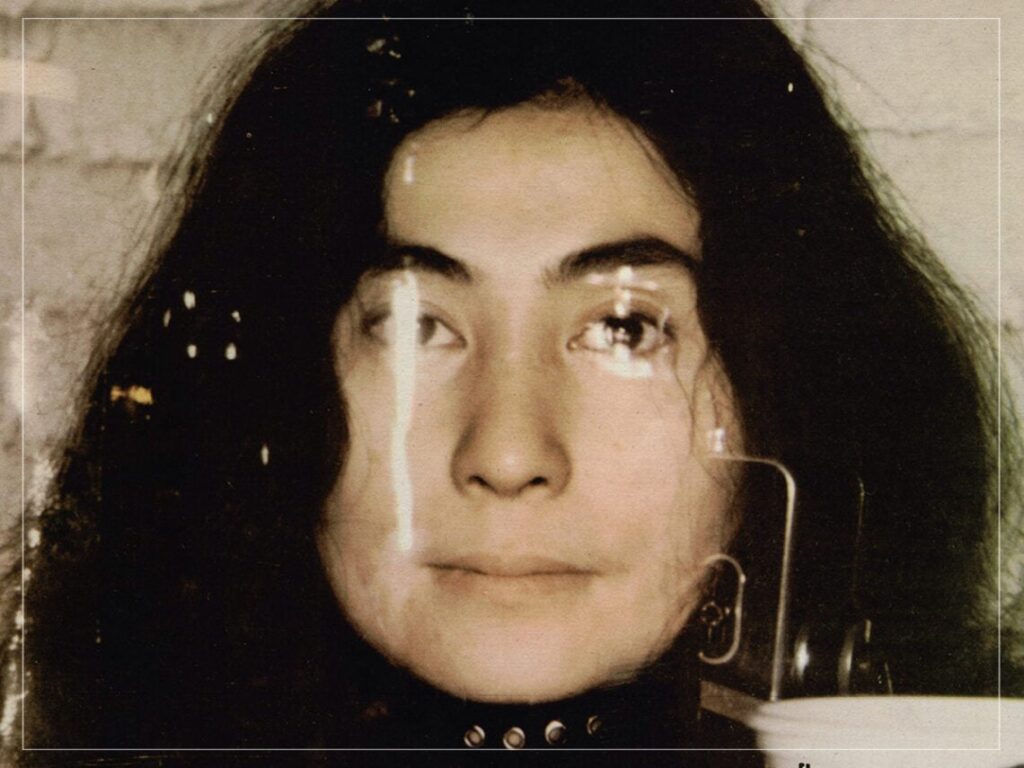
There are several boring subsects of so-called music fans, and almost all of them are governed by an opinion dripping in misogyny. Of these, the cult of Yoko Ono haters is perhaps the dullest and one of the most enduring. It seemed that from the second she was spotted on the arm of John Lennon, she became nothing more than that; simply an accessory, a leech, instantly erasing her own powerful career that pre-dated even her husband’s and, though for tragic reasons, has endured far beyond it.
It serves a certain narrative to conveniently ignore her talents. Yoko Ono is often dismissed as someone who inserted herself into Lennon’s music and ended up on stage through association rather than ability. Many still believe her career – and her collaborations with Lennon – existed only because of his influence, when in reality, the opposite is much closer to the truth.
When Ono and Lennon met in November 1966, he was visiting her gallery opening. By then, Ono was already a powerful name in the art world. After moving to New York in 1957, she’d been embedded in the avant-garde scene, especially finding a home within the crowd of experimental sonic artists, like the famed John Cage. When the couple met, Lennon was only just hitting his experimental phase with Revolver. But from that moment on, Ono’s influence became obvious. There’s no ‘Revolution 9’ without her, perhaps no revolution at all, as the artist’s impact turned Lennon on not only to experimental music and the boldest risks there, but inspired the politics that powered so much of it.
So I could sit here and say Ono naysayers should listen to something like ‘Yes, I’m A Witch’, her battle cry against her doubters where she stares them down and says, “You might as well face the truth / I’m gonna stick around / For quite awhile”, after declaring, “I don’t care what you say / My voice is real, my voice is truth”. But really, Ono’s career is more than that; her best work exists completely separate from that whole argument—the fact of who her husband was and people’s hate for her.
It’s a song like ‘Looking Over From My Hotel Window’ that feels powerfully representative of Ono at her best and as a vital and independent artist. In the same way that her visual artistry so often dealt with the human condition and vulnerability, especially in the case of something like Cut Piece, this track feels the same—it’s sparse, almost viscerally or uncomfortably honest as it feels like Ono is merely reading a rough page of her diary, set to music.
It also reveals a very different side to Ono. All too often presented as this cling-on yelling on stage that wanted fame, ‘Looking Over From My Hotel Window’ is characterised by the loneliness and uncertainty in life. She sings, “Age 39, looking over from my hotel window, / Wondering if one should jump off or go to sleep” as one of several allusions to suicide in the track, never turning away from the darkness. Instead, she goes all in with revealing lyrics about her daughter, Kyoko, who was kept from her, singing, “If I ever die, please go to my daughter / And tell her that she used to haunt me in my dreams / That’s saying a lot for a neurotic like me”.
Set to an instrumentation so simple you almost forget it’s there, it’s a track that sits at the opposite end of the spectrum to where doubters always place her. Defying the tired stereotypes, it’s soft, quiet, and deeply introspective. It’s also vitally contextual, too.
Again, in the face of her misogynistic treatment in culture, Ono’s biography seems to disappear into Lennon’s. Released in 1973, Approximately Infinite Universe was her first major solo step into the world of more popular music and a departure from the firmly closed-off avant-garde music world that was more performance art than anything. Living in New York to try and escape the UK’s racism towards her and prominently engaging with politics, appearing as a speaker at the US’s first feminist convention that year, Ono was clearly opening herself up to the world.
This album appears as a move to come out of the shadow and be heard louder as a demand to take up space as an artist in her own right, not in the boring way people are still so obsessed with boxing her into. Instead, this album, and a song as moving and revelatory as ‘Looking Over From My Hotel Window’, is a powerful statement of resilience from the artist, and a reminder that Ono is far more than the wailing voice by Lennon’s side.
[embedded content]
Related Topics