Harrison Ford’s mixed feelings on his most cherished movie: “Treated so badly by the critics”
 Posted On
(Credits: Far Out / YouTube Still)
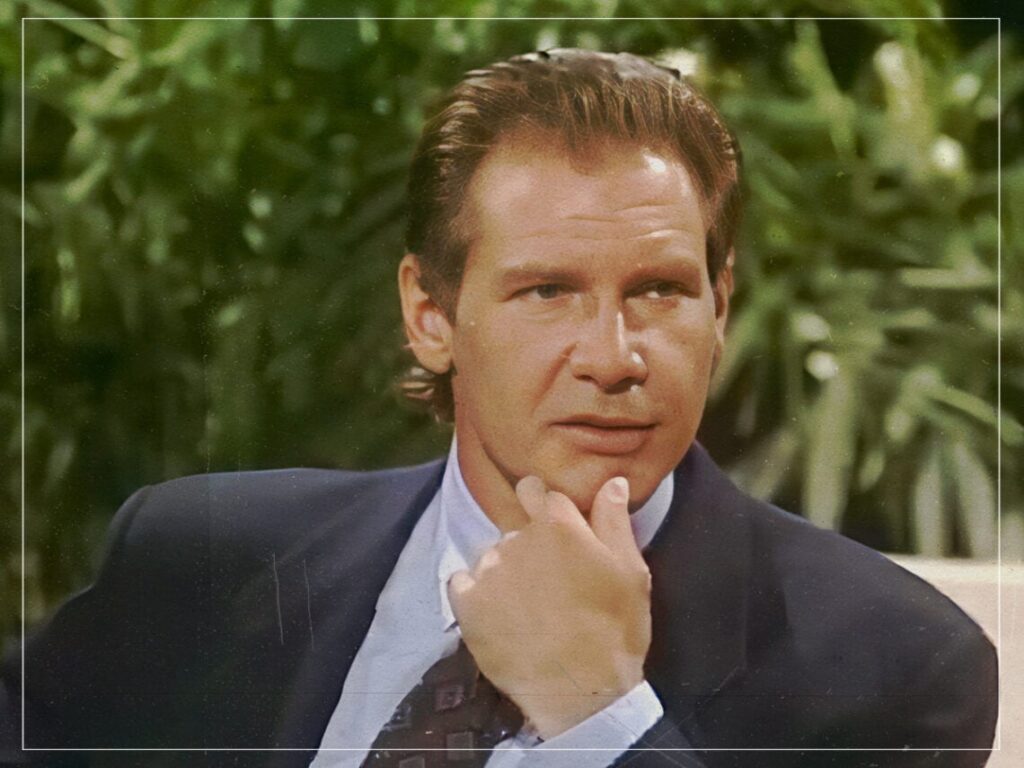
Harrison Ford is rarely effusive about anything in public, so it’s a bit surprising that he has a movie he wants to defend. The famously cantankerous octogenarian has plenty of options to choose from, though. After nearly six decades in the business of show, he has become synonymous with Hollywood cinema, whether he likes it or not.
There are plenty of movies that Ford could single out for being unfairly maligned. There was that overlooked Kathryn Bigelow thriller from 2002 called K-19: The Widowmaker, which is just one number away from sounding like a crime drama centred on ruthless police dogs. There was also that supernatural thriller directed by Robert Zemeckis called What Lies Beneath that was pretty quickly forgotten. Come to think of it, most of the movies in his filmography have been overshadowed by a select few, and even some of those might require some defending.
For example, Ford could easily feel the need to champion the merits of the 1982 classic Blade Runner. Critic Pauline Kael panned it when it was released, and Ridley Scott is still complaining about it four decades later. Nevermind the fact that it has since been embraced as one of the greatest science fiction films of all time and Kael passed away over two decades ago – the director is still throwing punches.
Ford spends his emotional capital more prudently. The movie that he has spent time defending is the much more obscure 1986 drama The Mosquito Coast. Directed by Peter Weir, who collaborated with Ford on 1985’s Witness and would go on to helm Dead Poets Society, it stars the Blade Runner actor as a nonconformist inventor who whisks his family off to the jungle in Central America to free himself of the tyranny of civilisation. Helen Mirren plays his wife, and River Phoenix plays their son.
It’s a strange film. It starts out like a family-friendly adventure movie about a loveable conspiracy theorist who seizes life by the horns and builds an off-the-grid utopia, but it gets dark and then bleak and then punishing. Ford’s character is far from the Hollywood-sanctioned heroes that the actor usually plays, and as far as he’s concerned, that’s exactly what he and Weir were going for.
In an interview with UPI around the time the film came out, he tried to convince readers that the critics had been wrong to dismiss it. “There are two reasons why I am speaking up about Mosquito Coast,” he explained. “This is not a pre-sold film. This is no easily identified genre film, one that people can make up their minds to see as if deciding to have Chinese food or Italian food.” It’s a film like no other, he insisted, so it had to be “described to the audience.”
The other reason was that he felt the reviews had been written too hastily. “I have never seen a serious film treated so badly by the critics,” he said. “And I think they’re wrong. I don’t mind saying I’m here trying to counter those negative reviews.” In fact, he believed that it took three whole days to fully process it. He added, “It’s a very complicated and ambitious piece, and I would like people to see it. I would like to do whatever I can to help that happen.”
His request fell on deaf ears. The Mosquito Coast was a box office dud, making only $14million off of a $25million budget. It might have fared better with a savvier marketing campaign that leaned into its darkness rather than its adventure. Ford was right that there hadn’t really been a film that tried to strike the same tone, but nearly 15 years later, Danny Boyle’s The Beach brought a more youthful edge to a similar concept and walked away with a box office hit.
[embedded content]
Related Topics