‘God Save The Queen’: The song that killed punk?
 Posted On
(Credit: Alamy)
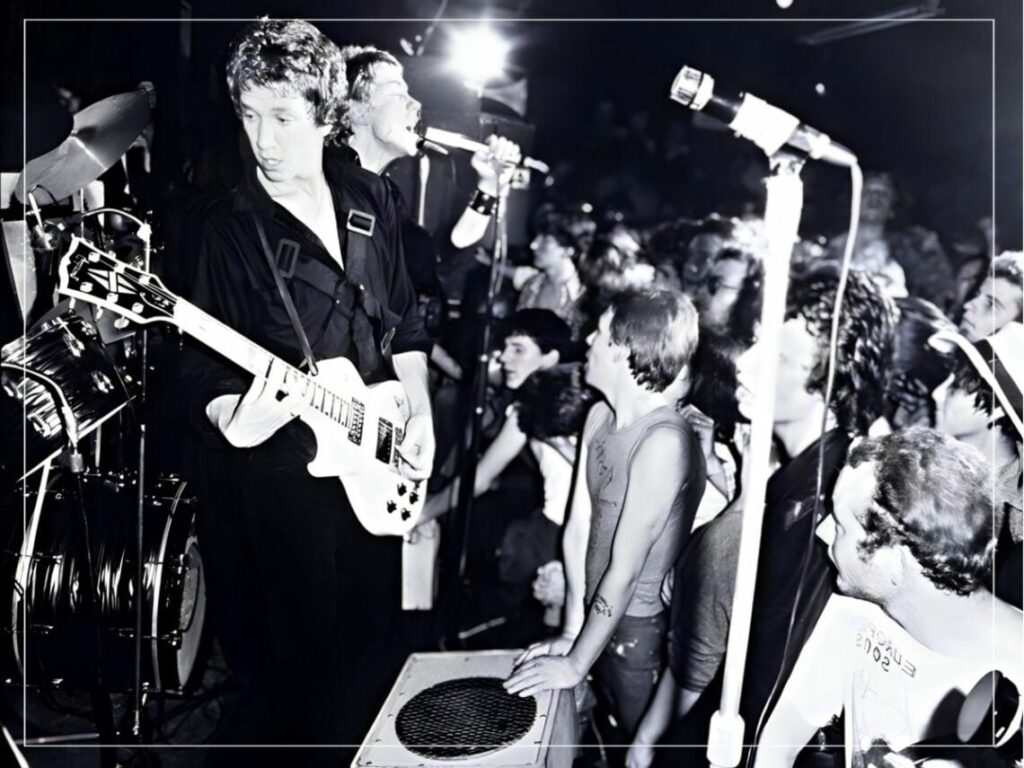
After a brief, confused hubbub, ‘God Save The Queen’ quickly became the moment punk stopped being a movement and turned into a consumable genre. The powers that be were puzzled and appalled by the rupturing of the status quo that it initially caused. In its earliest days, it was a potential upset to incumbent and inequitable capitalism. Its unpolished DIY ethos did away with gatekeepers and the notion that working-class ruggedness had no place in the refined world of art.
If that viewpoint of its earliest outburst seems a little oversimplified, then that’s nothing compared to the oversimplification that followed. The outrage that The Sex Pistols caused quickly became marketable. Now, Union Jacks daubed with scribbled print are practically giftshop fodder at Buckingham Palace, and perhaps inadvertently, the pantomime of ‘God Save The Queen’ is to blame for that.
This fate didn’t always seem like it would befall the track. The anarchy that the group stirred up caused so much heat for EMI that they eventually terminated their lucrative contract with the band. But once the heat died down and all the threats thrown at the group subsided, perhaps it became clear that profits had been missed.
The song was a smash hit. Though some stores refused to stock it, the fact that at one point around 150,000 copies were sold in a single day certainly proves that plenty got behind its potential. Uproar suddenly became profitable. That was problematic for the core philosophy of punk. It’s not that the movement was supposed to be cult, but it certainly wasn’t supposed to be co-opted by the mainstream.
Alas, where there is money to be made, capitalism soon follows. In doing so, punk was nullified, commodified and aestheticised. In time, it would even be mythologised, too. And that myth proves that the punk as a perfunctory disruptive force is most certainly a thing of the past. Sadly, it became a thing of the past too quickly.
With plenty of spit and asocial wit, the Sex Pistols moved on from its original tenets in such a hurry that the status quo was shocked and then stirred towards a rapid response. The bang went off before the barrel was loaded, rendering ‘God Save The Queen’ the party popper of a revolution that never was.
The song itself was rather sloganistic, and that simply meant that the genre could quickly be codified. It wasn’t a deep hammer-blow to the Royal Family and fascism, it was a quick sucker-punch in a recognisable uniform. So, plenty of copying sprung up, while other cult groups moved away from the leather and spikes in search of something more original—plenty of interesting ideas sprung up too, but they weren’t punk and they weren’t a ‘movement’ in the traditional sense, they were the vague and disenfranchised ‘post-punk’ that continues in its indistinct lurch to this day.
But as for punk, in the aftermath of ‘God Save The Queen’, subversion was turned into branding—the rebellion branch of the same capitalist enterprise it did little to overthrow. Slowly but surely, punk’s explosive newness was tainted with nostalgia, the genre’s ubiquitous use of the Union Jack undergoing a transformation from an anarchic symbol to a nod to Beatlemania as a different future ceased being imagined and even radical punk was packaged as a reimagining of the past. It was a good song, but it wasn’t the song that the genre needed.
[embedded content]
Related Topics