‘Ghost in the Noonday Sun’: The Peter Sellers movie so abysmal the studio buried it for a decade
 Posted On
(Credits: Far Out / United Artists)
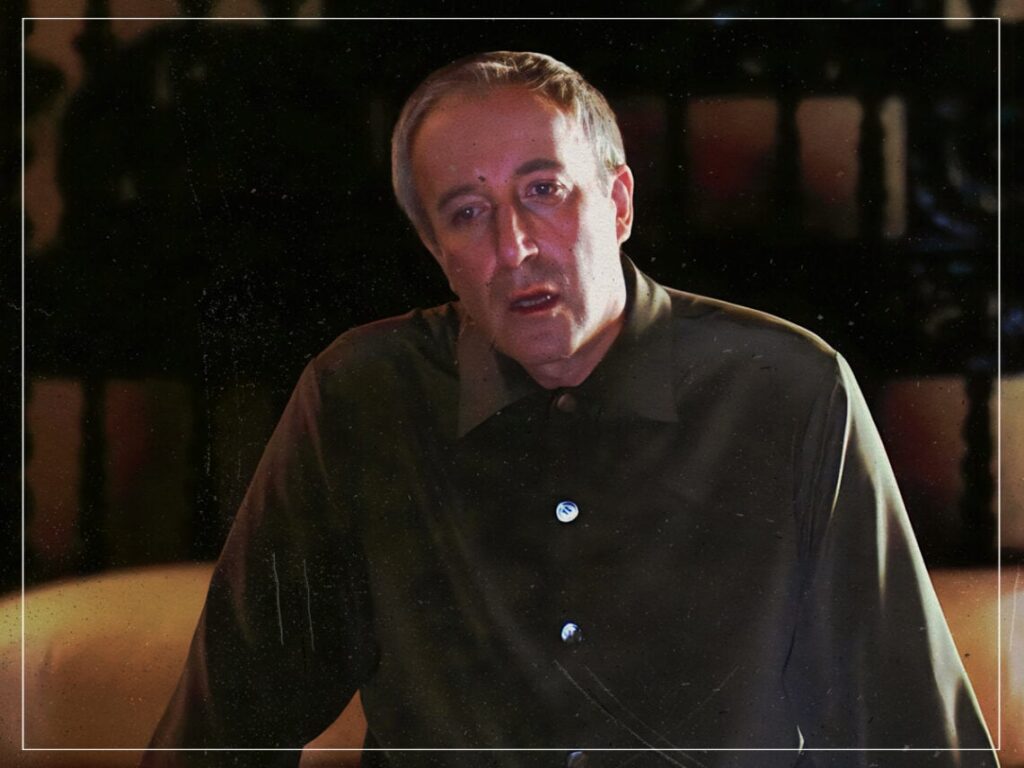
After over two months of shooting a pirate comedy in Cyprus called Ghost in the Noonday Sun, director Peter Medak realised his hair had turned grey. The year was 1973, and the shoot had been a debacle the likes of which Medak had never experienced in his young career. There were issues with lousy weather and drunken locals hampering production. Still, the most damaging aspect of the shoot came from the movie’s star Peter Sellers, who often seemed hellbent on driving himself and everyone around him insane. Medak once joked that even though the film only took 70 days to shoot, it took him five long years to recover. In truth, the experience was so draining that Medak wasn’t even upset when the studio refused to release the abysmal picture for over a decade.
Ghost in the Noonday Sun began life as a 1965 novel by Sid Fleischman, and a screenplay adaptation found its way to Sellers by the early ’70s. The Dr Strangelove star, who was comedy royalty in his native Britain and Hollywood, talked his pal Medak into directing the movie. At that time, Medak had only directed a few British black comedies like The Ruling Class and The Third Girl From the Left, so he jumped at the chance to make a picture with a star like Sellers. He’d soon regret this decision.
During this period, Sellers was well-known for being hard to work with thanks to his eccentric and unpredictable behaviour. He suffered from depression and was dependent on alcohol, which is a very dangerous combination, especially when you throw in fame, talent, and exorbitant sums of money. In truth, he was often indulged because of his status and perceived value as a comedian, although his antics on the set of Ghost in the Noonday Sun surprised even those who knew he could be a demanding customer.
It would take too long to catalogue all of Sellers’ offences during the shoot, but they involved refusing to work, pretending to be sick, trying to get the production shut down, firing producers and a cinematographer, and faking a heart attack. Yes, really. He put his awful behaviour down to heartbreak, as his relationship with Liza Minnelli was falling apart at the time, but Medak felt he’d simply lost confidence in the production and was acting out.
Arguably, the most illuminating microcosm of the entire production came when Sellers insisted on filming a Benson and Hedges cigarette advert on one of his days off. Medak was already near breaking point, but Sellers insisted that he also direct the advert, which would feature Sellers in his pirate outfit from the film. Against his better judgement, Medak agreed, but on the day of the shoot, was stunned when Sellers wouldn’t hold the cigarette packet in his hand.
“Didn’t anyone tell you I can’t touch a cigarette packet?” Sellers reportedly asked. “I simply can’t touch it.” Medak was in disbelief, but Sellers insisted, “I’m chairman of the Anti-Smoking League, and it’s in my contract that I’m not allowed to touch cigarettes.” Somehow, he was getting paid £50,000 and a Mercedes to star in a cigarette advert that wouldn’t even feature him holding the product – but he’d neglected to tell the director, who didn’t even want to be making the ad in the first place.
Naturally, all this strife wasn’t exactly conducive to making a good movie, and when Medak, Sellers, and co-writer Spike Milligan watched the first cut, the director admitted, “We all just wanted to kill ourselves.” Columbia Pictures felt similarly, and the studio scuttled the film’s theatrical release. Fleischman, the author of the book, was dumbfounded by the film, telling the LA Times, “Even Peter Sellers was bad in it.” The film then sat on a shelf for more than a decade, before being unceremoniously released on VHS in 1985.
To give Sellers a tiny bit of credit, though, Medak claimed he attempted to make amends when he realised Columbia intended to bury the movie. Medak told The Guardian, “Peter said, ‘I want to buy back the film from Columbia, and I want you and Spike to redo the narration and re-edit whatever you want, and I’ll get it released.’” Unfortunately, that never came to pass. Barely a few days later, Sellers called Medak again and grumbled, “I can’t buy back the film because it’s been written up for twice as much as it cost.”
Sadly, even though the folly of Ghost in the Noonday Sun didn’t do much to hurt Sellers or Milligan’s careers, it did impact Medak. “It turned out to be the biggest disaster of my life,” he told Filmmaker. “When something goes wrong in a movie — and a lot went wrong — the director gets all the blame. So I was blamed for it, and I blamed myself for it for 43 years.”
Medak’s career stalled out for a few years, but he eventually recovered with movies like 1980’s The Changeling and 1993’s Romeo is Bleeding. He has also enjoyed a thriving career directing television from the ’80s right up until modern greats like Breaking Bad and The Wire.
Most amazingly, though, Medak claims that he has no regrets about Ghost in the Noonday Sun, even though he says he tried to block it out of his memory. “However much my hair turned grey on that film,” he smiled, “to work with the genius of Peter and Spike, I would do it again tomorrow.” He must be a glutton for punishment.
[embedded content]
Related Topics