Decoding The Who’s mantra: The lessons we can learn from ‘My Generation’
 Posted On
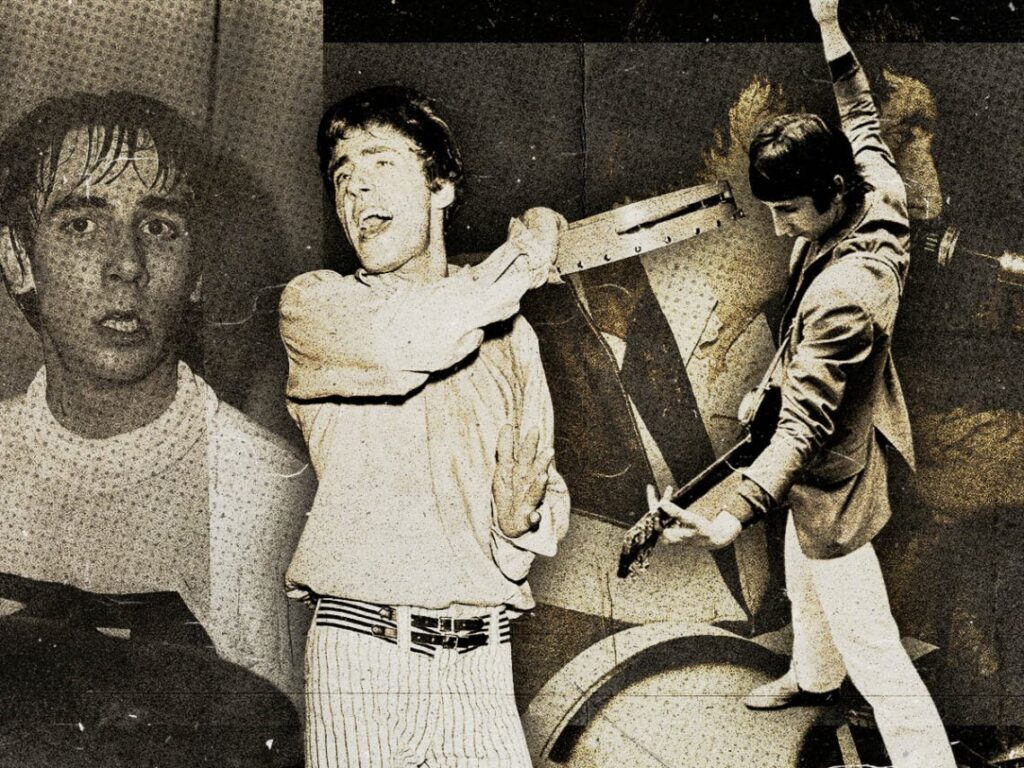
(Credits: Far Out / The Who)
There was much to feel lost and angry about as a youngster in the mid-1960s. And then The Who came and summarised it all with their anthem for the ages, ‘My Generation’.
Seen by many as the song that almost single-handedly caused the full punk boom of the 1970s, ‘My Generation’ kicked back against pretentious, high-brow England by providing space for those who no longer felt like they had a place in society. For Townshend, this idea pulled at several distinctive threads.
The first was his general state of malaise as a young’un navigating war-torn England. Another was trying to categorise two periods of time into separate corners. As an artist, Townshend once said, this was a really important thing to do at the time. “‘My Generation’ was inspired by the fact that I felt as artists we had to draw a line between all those people who had been involved in the Second World War and all those people who were born right at the end of the war,” he told Radio X in 2019.
This is actually a more complicated viewpoint than it seems. An observation Townshend is also well aware of. Because while he became aware of all the previous generation had “sacrificed” for his generation, he realised they also had nothing to pass on. “No guidance. No inspiration. Nothing really,” he said.
‘My Generation’ came as a response to that barrier. “We weren’t allowed to join the army, we weren’t allowed to speak, we were expected to shut up and enjoy the peace,” he said, “And we decided not to do that.”
This generational conflict is what we feel in the lyrics. “People try to put us down,” Roger Daltrey sings. “Just because we get around / Things they do look awful cold / I hope I die before I get old”.
With all that in mind, it’s easy to understand why it planted the seeds for the later punk explosion while anchoring all the issues felt at the time. Mods took it on as their badge of honour, an anarchist symbol that told their parents to shove their poorly-veiled self-righteousness. And the way it was shaped as this cutting chant for anyone needing to express their rage made it the ultimate middle finger in song format.

Weirdly, Townshend was somewhat inspired by Bob Dylan’s style of writing when putting pen to paper. But weirder still, his brooding muse is also the one who called out all the lingering contradictions at the heart of ‘My Generation’. Because we know it’s a song about pushing back when you feel alienated and disillusioned with society. But there’s also an obvious simplicity to it that feels as performative as the generation Townshend is attempting to criticise.
Dylan was well aware of this. He even went into all the reasons it falls short once, writing about how Townshend does the very thing he takes umbrage with. Which, in short, is the way he’s talking about something important without actually offering anything important. No actual real guidance, as he put it. In The Philosophy of Modern Song, Dylan didn’t hold back on all of these things.
“Like a lot of boomers, Pete seems to have a chip on his shoulder in this song,” he wrote, immediately comparing Townshend to the generation he’s annoyed with. “But he’s not totally confident; he’s somewhat back on his heels. There’s a certain defensiveness,” he added, implying that the former is aware of the older generation’s resentment for adolescent naivety.
“Perhaps he feels like he will never measure up, or he knows they resent his generation’s newly abundant leisure time,” Dylan said.
He then says that the song’s biggest failure is that it’s essentially Townshend worrying that he’ll one day disappear and/or become the generation he’s at odds with. But that his argument falls short because he “can’t even point the finger himself” and “depends on his mouthpiece, Roger, to hurl the invective”. In what could be considered a back-handed compliment, Dylan also adds, “That fear is perhaps the most honest thing about the song. We all rail at the previous generation but somehow know it’s only a matter of time until we will become them ourselves.”
He effectively concludes by saying it has nothing to offer except doubt. Maybe that presents the bigger lesson hidden deep within ‘My Generation’, coming from someone who experienced one of the biggest generational shifts in history. Is it better or worse to simply air one’s own grievances when there’s no cause to actually change anything?
Or better yet, is it simply a regurgitation of all the misplaced anger every generation feels when picking and choosing the parts of the past they want to hold onto, as Dylan said? It’s a brilliant song. That much is entirely indisputable. Which also brings us to the obvious factor: does it even matter? All of these criticisms merely point to all the layers that make it so great, even still. It’s flawed, of course it is, and maybe Townshend’s confidence does falter a little, but all of those are also defining features of generational angst.
[embedded content]
Related Topics
The Far Out Bob Dylan Newsletter
All the latest stories about Bob Dylan from the independent voice of culture.
Straight to your inbox.