Could London tourism live without Jack the Ripper?
 Posted On
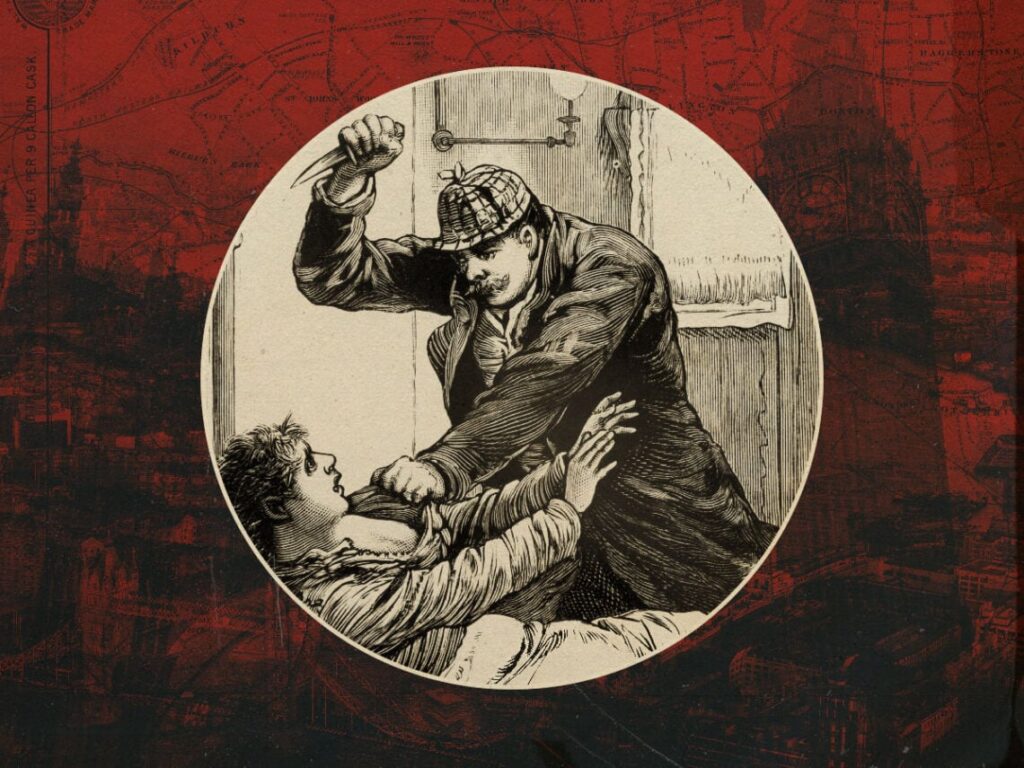
(Credits: Far Out / National Police Gazette)
Make no mistake, London is one of the world’s greatest cities to be a tourist. Ancient, old buildings nestled amongst skyscrapers, and history on every turn.
The gullible, the unintelligent and the internet trolls might try and claim that it’s dangerous and has terrible food, but that’s simply not true. The murder rate is the lowest it’s been in 13 years, and far below that of cities like New York and Berlin. While the food, much panned online, is statistically the most diverse on the planet.
It’s the history that really draws people in, though – the chance to drink in the same pubs as Charles Dickens, watch a play at The Globe, the home of William Shakespeare, and see the residences that have served the Royal Family for generations.
There’s one historical figure that casts a long shadow over London tourism, a figure that has fascinated the public for over 130 years, and somebody who has committed some of the most vile crimes on record – Jack the Ripper, whose story starts in 1888 in Whitechapel, East London, when, between the end of August and November, there were five murders, and these weren’t just killings, but truly brutal attacks that saw four of the five horribly disembowelled.
This was an age in which violence against women was not uncommon, but these attacks were shocking, targeting prostitutes and cutting them open, mutilating them and pulling out their organs, and all on the streets of the nation’s capital, under the cover of darkness.
The press dubbed the killer ‘Jack the Ripper’, and his identity was never discovered, with the trail running cold. The precision with which he dissected his prey meant that many suspected a doctor, surgeon, butcher or barber, somebody who knew how to use a blade. A number of men were suspects, including the Queen’s grandson, Prince Albert Victor, but nobody was ever charged. That’s led to a mystery that has intrigued generations and one of the most macabre tourist industries in the world.

This isn’t your typical dark tourism, this is focused on a man who brutalised and most likely sexually assaulted his victims. The world has changed a lot since he committed his crimes, but it seems strange that a man with vile infamy can become a tourist attraction. It’s hard to imagine a John Wayne Gacy tour in Chicago or hordes of tourists doing the Dahmer trail in Milwaukee.
There aren’t many cities that trade so successfully on their past as London, and history comes in all shades, not just the glorious and happy, the commercialisation of Jack the Ripper does need to walk a moral tightrope. It’s estimated that around 400 people per night take one of East London’s many Jack the Ripper walking tours. There is, of course, the Jack the Ripper museum, which comes complete with merchandise. Other businesses in the area have been quick to jump on the infamy of the murderer, with a chip shop trading as Jack the Chipper, and a barbers under the name Jack the Clipper.
There’s always going to be a fascination around unsolved crimes, especially when the Royal Family have been implicated, and largely debunked. Generations have been born and died since the crimes were committed, which has led to Jack the Ripper transforming from a terrifying demon to a character that feels so far removed from modern London that he’s almost become fictional, but it’s important to remember that he isn’t, because this is a criminal who brutally murdered women on the streets of the capital, picking on the marginalised. The victims have seen their lives become footnotes for the romanticised killings.
With a number of Royal palaces and parks, the West End, a multitude of world-class museums, and so much more, the city doesn’t need Jack the Ripper in a financial sense, and could survive without his grisly crimes being romanticised. However, the Ripper was allowed to thrive and get away without punishment, partly because of who he killed. Victorian society and the living conditions in the East End, with overcrowded houses, poverty and misogyny, were the backdrop to his crimes.
In many ways, the story of his murders tells us more about London at that time, for real people, not the rich, than any number of palaces or museums ever could. It’s just important that the mystery around his identity, and the time that has passed since the attacks, don’t allow the violence and horror of his crimes to be downplayed.
[embedded content]
Related Topics