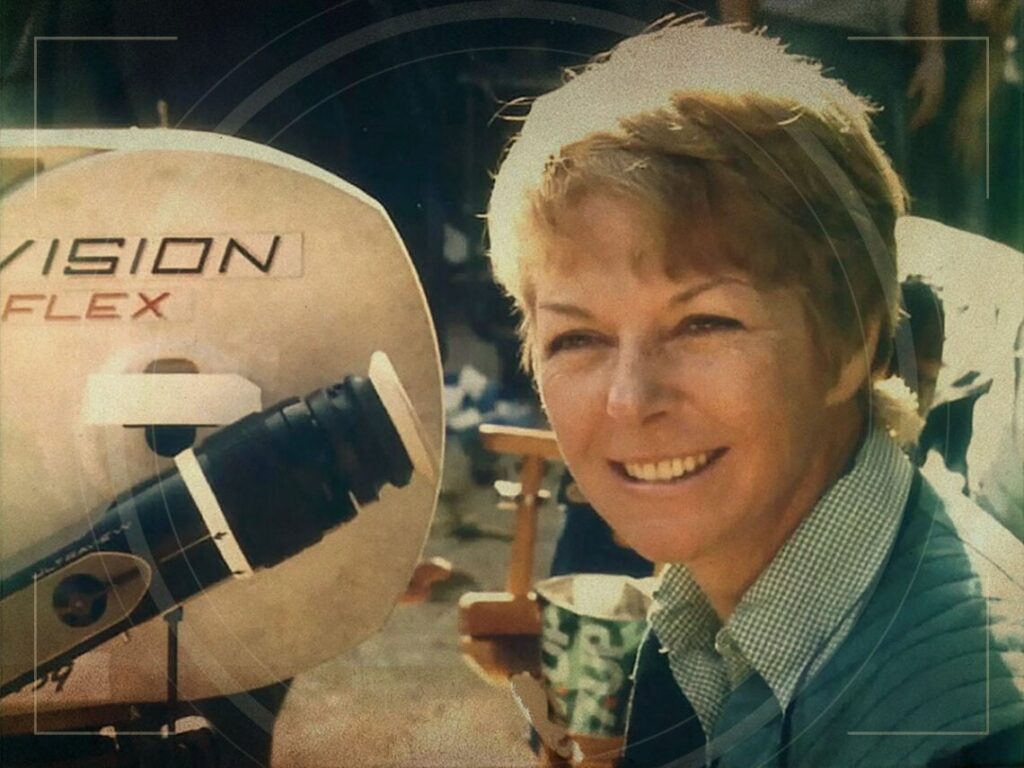
Brianne Murphy: the first female cinematographer
 Posted On
(Credits: Far Out / MUBI)
In the history of the Academy Awards – an institution that was founded almost 100 years ago – no woman has ever won ‘Best Cinematography’. Just three women have been nominated since 2018, with the first being Rachel Morrison for Mudbound, followed by Ari Wegner and Mandy Walker. Has cinematography always been an overwhelmingly male-dominated area, or are female directors of photography just not getting the credit they deserve?
While female cinematographers are certainly overlooked when it comes to award ceremonies, the sad truth is that men have reigned over the medium since the beginning of cinema, with women only beginning to take on the role more widely from the 1980s onwards. Unfortunately, many male filmmakers and industry executives have long been of the belief that women aren’t capable of operating heavy cameras and taking on such an important role – which is, of course, ridiculous.
Luckily, more women are starting to take on the job of DOP these days, helping to challenge perceptions of women in Hollywood. Figures like Agnes Godard, Sophie Maintigneux, Ellen Kuras, Charlotte Bruus Christensen, and Maryse Alberti are just some of the women who have shown that female cinematographers are as capable as men—why wouldn’t they be? However, before them was Brianne Murphy, born in 1933, who often took unconventional measures to become a cinematographer.
Murphy became the first female cinematographer of a major studio movie when she filmed Anne Bancroft’s directorial debut, Fatso, in 1980. Before then, she had found alternative methods of getting her foot into the world of cinema, facing many gender-based barriers that she refused to let stop her from achieving her goal.
During the filming of On the Waterfront by Elia Kazan, starring a young Marlon Brando, Murphy rocked up on set despite the fact she had nothing to do with its production. Yet, she wanted to see a real movie being shot, and she wanted to learn how the equipment worked, so she snuck about and eventually found herself involved in some behind-the-scenes work. Mistaken for a crew member (despite being the only woman on set who wasn’t an actor), she played along when asked to run an errand, and before she knew it, she’d secured her first job in Hollywood.
They say to fake it ‘til you make it, but Murphy really took this sentiment to a whole new level. Evidently, in an industry where being a woman was an automatic obstacle, acting as though she was meant to be on set allowed her to get a little bit closer to success. Murphy continued to find innovative ways to find work, reportedly crashing a circus performance by dressing up as a clown, resulting in her earning a job for the travelling company as a photographer.
From there, her career took off, and she found various jobs in different roles, like working as a script supervisor for movies like Angels From Hell, House of the Black Death, and other low-budget films from the 1960s. She served as a production manager for Girls in Action and a unit manager for Bloodlust, while the decade also saw her work as an assistant director for the movies The Night Rider and Single Room Furnished. Murphy even directed her own film, Blood Sabbath, in 1972.
Sometimes, Murphy had to use a male pseudonym, like Brian, to get jobs, surely surprising crew members when she appeared on set. She was even denied from joining her local cinematographer’s union for a start because of her gender, only being granted a place several years later.
It was in 1975 that she was able to find some work as a cinematographer, with Colombo’s DOP Richard C Glouner recommending her when he had to leave the show. Despite resistance from higher-ups, he asserted that she had talent, and she subsequently began filming various television episodes.
Throughout her career, Murphy earned various award nominations, including three from the Emmys. Meanwhile, she won a Daytime Emmy and even an Academy Award for ‘Scientific and Engineering Achievement’. Murphy became the first woman to join the American Society of Cinematographers Guild in 1980, highlighting the need for diversity in an overwhelmingly male landscape.
Thanks to Murphy, people started to realise that cinematography can be just as successfully executed by a woman as it can be by a man. She broke down barriers that had been up for decades, hitting various cinematic milestones that deserve to be celebrated.
[embedded content]
Related Topics