The Beatles and Liverpool football: A love affair or did they not really care?
 Posted On
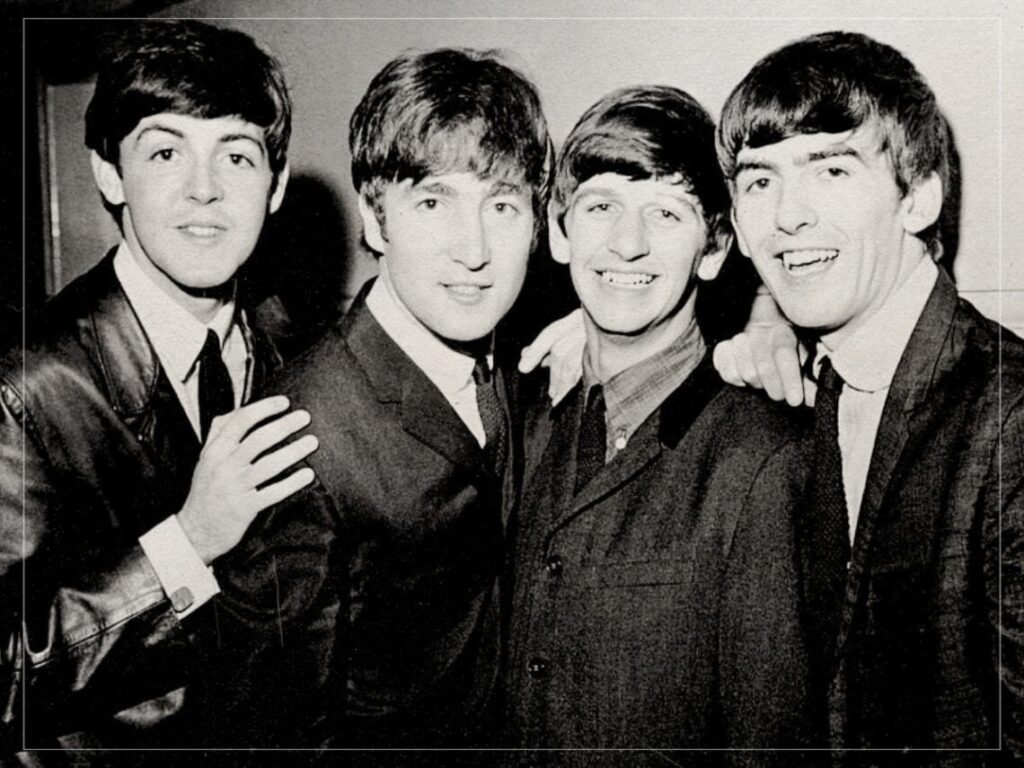
(Credits: Far Out / Alamy)
In America, millions of people first learned about the death of John Lennon while watching a live broadcast of the NFL’s Monday Night Football on the ABC Network.
Late in the game between the New England Patriots and Miami Dolphins on December 8th, 1980, the announcer Howard Cosell informed the nation that the beloved Beatle had been murdered in “an unspeakable tragedy”. It’s an indelible memory for a lot of people, made all the more strange by the delivery method. John Lennon had actually attended a Monday Night Football game six years earlier and chatted with Howard Cosell in the press box at halftime, telling him that the NFL game was “an amazing event and sight that makes rock concerts look like tea parties”.
Like a lot of Britons, however, Lennon didn’t quite understand American football’s deviations from the norms of ‘proper’ football or rugby. “I was trying to follow the game,” he admitted, “But I couldn’t understand why half the team was off, and half the team was on”.
Turns out, he wasn’t much of a sports fan (a few childhood drawings aside), and wasn’t all that knowledgeable about his own country’s version of football, either. “The beautiful game,” which would have been a daily obsession for an awful lot of Liverpudlians, including Lennon’s own dad Alfred, was something of a bore to John for most of his life, and the same was certainly true of George Harrison, who, when asked which team he supported in the Liverpool Derby, answered, “the third one”. Maybe they just grew up at the wrong time.
From 1948 to 1955, during The Beatles’ formative school years, both of Liverpool’s top-tier football clubs, Liverpool FC and Everton FC, were consistent losers, relegated to the second division of English football. Things turned around for both clubs in the 1960s, but by then, the Fabs were off conquering the world and weren’t all that engaged.
The lads did make an attempt to please their hometown fans and show some sporting enthusiasm in 1965, when they collectively sent a telegram to legendary Liverpool manager Bill Shankly, wishing his team luck in the 1965 FA Cup Final, but Shankly supposedly huffed that he’d never seen any of them coming through the turnstiles at Anfield. Two years later, Liverpool footballer Albert Stubbins was included as one of the famous faces in the cover art of the Sgt Pepper’s Lonely Hearts Club Band album, but this seemed to be as much about Paul McCartney appreciating the musicality of his name.
Along with Lennon and Harrison’s general indifference toward football, Ringo disappointed the locals by occasionally casting his allegiance to Arsenal, the team his London-born stepfather supported, which left it all up to Macca. Surely, one out of four of Liverpool’s greatest ambassadors must be a Liverpool FC fan?
“None of us was very sports-minded,” Paul once said, before blasphemously suggesting that he supported both Liverpool and Everton.
“Here’s the deal,” he explained to Radio Merseyside, “My father was born in Everton, my family are officially Evertonians, so if it comes down to a derby match or an FA Cup final between the two, I would have to support Everton. But after a concert at Wembley Arena, I got a bit of a friendship with [former Liverpool player/manager] Kenny Dalglish, who had been to the gig, and I thought, ‘You know what, I am just going to support them both’, because it’s all Liverpool and I don’t have that Catholic-Protestant thing. So I did have to get special dispensation from the Pope to do this, but that’s it, too bad. I support them both.”
These days, if you find yourself in the concourse of John Lennon Airport in Liverpool, don’t be fooled by all the magnets and tea towels combining The Beatles and LFC logos, for John, Paul, George, and Ringo weren’t that bothered about the footie, and it’s probably all for the better. They kept their focus on the music and let the football fans carry their message.
[embedded content]
The Far Out Beatles Newsletter
All the latest stories about The Beatles from the independent voice of culture.
Straight to your inbox.