The comedy actor Eddie Murphy called the pinnacle: “The ceiling of the whole art form”
 Posted On
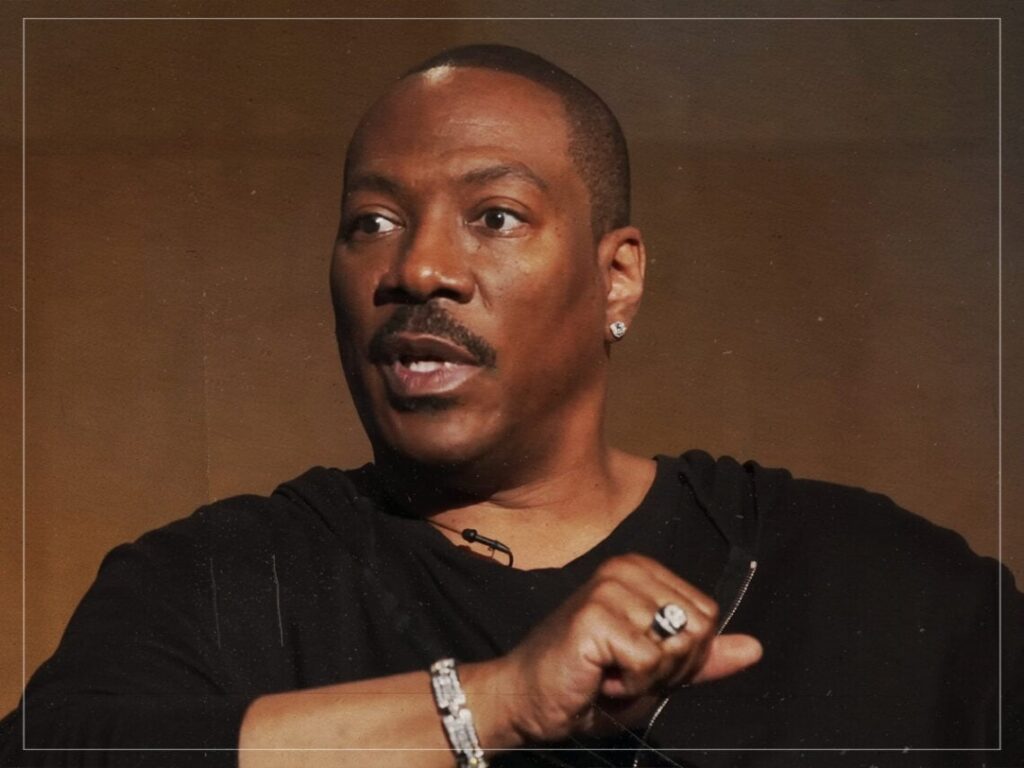
(Credits: Far Out / YouTube Still)
Alongside Robin Williams and Steve Martin, Eddie Murphy is one of the few wildly successful stand-up comics who have been able to not only break into Hollywood but go up against dramatic actors for serious roles.
Murphy’s career as a stand-up is easy to brush over, given the starry big-screen success he enjoyed later on, but his achievements in that arena are hard to overstate. After joining Saturday Night Live and bringing the show back from the brink of cancellation through sheer magnetism, his solo special, Eddie Murphy Raw, was turned into the highest-grossing stand-up film of all time. It still holds that record.
But all of that pales in comparison to Murphy’s success in Hollywood. At just 20 years old, he made his feature debut, 48 Hrs. The film practically invented the buddy cop genre and rocketed to the top of the box office standings for 1982. His second film, Trading Places, saw him consistently stealing the spotlight from fellow SNL cast member Dan Ackroyd, a distinction few performers can claim, for better or worse.
A year later, he landed his biggest hit yet, Beverly Hills Cop. Playing laid-back plain-clothes police detective Axel Foley, he single-handedly carried that film to box office dominance even though the part had originally been intended for Sylvester Stallone.
For the next two decades, the comic-turned-actor moved from strength to strength with movies like Coming to America, The Nutty Professor, and Shrek, in which he yet again stole the spotlight from a notorious scenery-chewing comic – this time Mike Myers. After a brief career downturn, Murphy pivoted to dramatic roles, playing James ‘Thunder’ Early in Bill Condon’s musical Dreamgirls. He picked up an Oscar nomination for his performance, further cementing his place as a Hollywood power player.

With all that said, it is hard to imagine Murphy ever really looking up to anybody, or certainly feeling the need to. But, being a humble student of the art of acting and comedy, Murphy knows that while you might reach certain heights, every performer needs to have one other contemporary whom they stare only upward at.
In a recent interview with The New York Times, Murphy looked back on his groundbreaking career and revealed that even though he changed the face of stand-up comedy and the film genre of comedy, he still thinks that the greatest performers in both realms came before him, not after.
“I haven’t witnessed the next level,” he said. “The ceiling of the whole art form, standup comedy, that’s Richard [Pryor]. And the ceiling for movies, for me, is [Charlie] Chaplin. I haven’t seen anyone come along that was better than Chaplin.”
Pryor’s connection to Murphy has been long-established. The two men operated in similar fields with a similar panache for being both whip-smart and uniquely brash. Neither comic could be thought of as anything other than the best to ever do it. The connection between Chaplin and Murphy is perhaps a little murkier.
It might be surprising to learn that a comic who was so cutting-edge in the ‘80s could be so enthralled by a silent film actor who made his most famous contributions to cinema in the 1920s, but Chaplin was a giant of the industry who influenced the entire medium both as a performer and as a director and producer.
Murphy’s voice acting and impressions are two of his most famous skills. Still, it’s easy to see how the physical comedy and pathos that Chaplin pioneered in the silent era could have influenced Murphy’s kinetic on-screen charisma. Even in comedic movies like Beverly Hills Cop, he is able to use his face rather than his voice or quippy one-liners to convey genuinely moving emotions, and while his expressions might not reach Jim Carey levels of elasticity, he has mastered the micro-expression to virtuosic comedic effect. No doubt Chaplin would have given him his seal of approval.
[embedded content]
Related Topics