Why did Cat Stevens change his name to Yusuf?
 Posted On
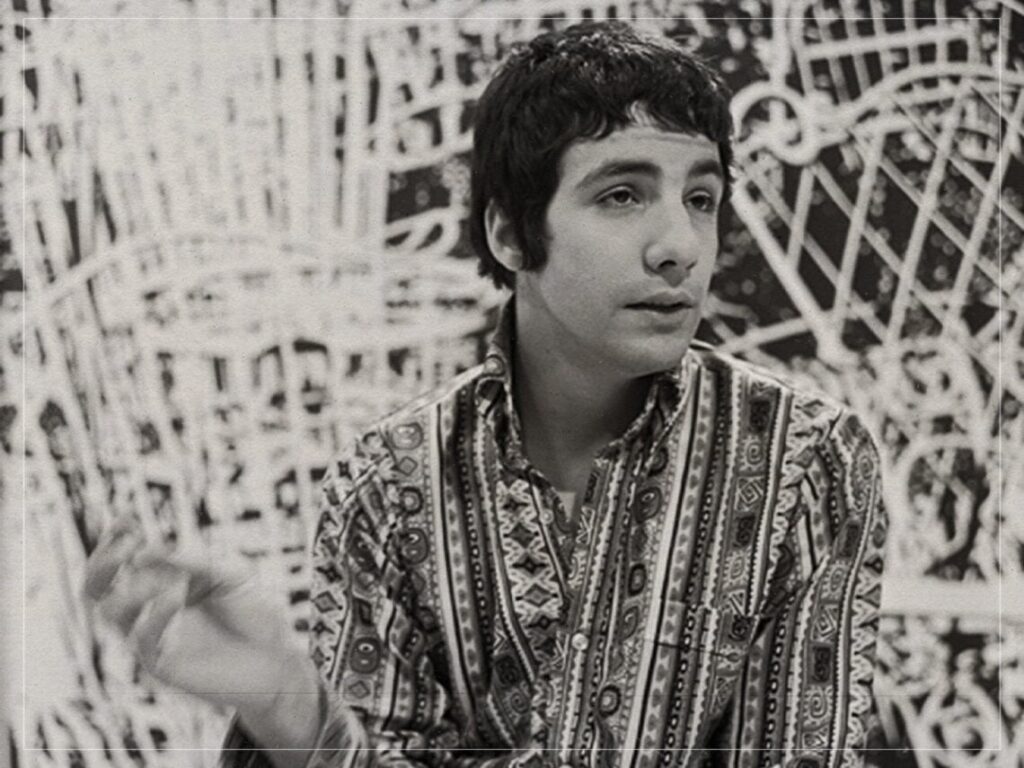
(Credits: Far Out / A. Vente / Beeld en Geluid Wiki / Netherlands Institute for Sound and Vision)
Renowned under his original stage moniker of Cat Stevens, Steven Demetre Georgiou carved an unmistakably distinctive path in the music industry.
As a pivotal figure in the early 1970s singer-songwriter movement, Stevens later embraced Islam, undergoing a significant transformation and adopting the name Yusuf Islam. He set aside his guitar in favour of the Qur’an, a shift that left his devoted fans grappling with a mixture of admiration and frustration.
Before all of that, Georgiou became Cat Stevens after his then-girlfriend said his eyes resembled a cat’s, encouraging him to adopt the stage name as it both reflected his musical persona and rolled off the tongue nicely. He also deliberately chose the more flamboyant alias as a means to conceal his Greek heritage, explaining, “I didn’t think anybody was interested. And I thought that it had nothing to do with me,” he said before adding, “I couldn’t imagine anyone going to the record store and asking for that Stephen Demetri Georgiou album. And in England, and I was sure in America, they loved animals.”
Stevens’ captivating charm and melodic voice were quickly recognised by independent record producer Mike Hurst, a former member of the folk-pop group the Springfields. Before Stevens left music behind in 1977, he delivered a handful of enduring hits, including ‘Matthew and Son’, ‘Father and Son’, ‘Wild World’, ‘Moonshadow’, and ‘Peace Train’.
It is easy to frame that pivot as a clean before-and-after, as if one life ended and another began overnight. In reality, Stevens’ story reads more like a long internal negotiation, with art, illness, fame, and fear all taking their turn at the steering wheel. The closer he came to the edge, whether in a hospital bed or in the Pacific, the more music stopped feeling like an answer and started feeling like a question.

That is why the conversion lands with such weight when you trace the steps properly. It was not a rejection of melody so much as a hunger for certainty, a need for something sturdier than applause and coincidence. When he later spoke about music as a “mystical thing”, it sounded less like nostalgia and more like gratitude for a guide that carried him right up to the point where he felt compelled to choose a different compass.
Stevens’ first dance with death occurred in 1969, after the release of 1967’s New Masters, which didn’t perform very well in terms of sales and charting position. Stevens also experienced a bout of tuberculosis, which brought his career to a frustrating halt and nearly threatened his life. Nonetheless, he recovered and soldiered on, but this time with a newfound interest in discovering answers outside of Christianity. “It was then that I started to think: What was to happen to me?” he later wrote.
Upon his return to the music scene, he achieved international success with a new collection of introspective songs about his spiritual journey. After experiencing a significant rise to fame, however, Stevens experienced another near-death experience when he almost became engulfed in the strong ocean tides in Malibu, California.
He recalled the experience to Michael Krasny: “I felt as if I had no power. After I was swimming for about half an hour, I couldn’t get back to shore. At that point, quite simply, there was no one to help me. As they say, you’ll never find an atheist on a sinking ship. I called out. I said, ‘Oh God, if you save me, I’ll work for you.’ And at that moment, a wave, however big it was, came from behind me and pushed me forward, and suddenly, I had all the energy I needed. I was back on land and safe.”
When did Cat Stevens convert to Islam?
After trying to find answers in tarot cards, astrology, and his old Christian bible, Stevens started to despair until his brother brought back a translation of the Qur’an from his travels to Jerusalem. Finally, he found what he had been searching for. The Qur’an, he said, was “a guidance that would explain everything to me, who I was; what was the purpose of life; what was the reality and what would be the reality; and where I came from, I realised that this was the true religion.”
Therefore, in December 1977, Stevens embraced Islam and adopted a name better aligned with his newfound religious path: Yusuf Islam. Following the release of his final album as Cat Stevens, he withdrew from the pop music scene and immersed himself in the study and practice of his new faith. Still, he didn’t abandon music altogether: his appreciation for its importance in his journey to self-discovery remains intact.
As he explained to The Guardian: “[Music] is a mystical thing still. It is something that permeates our emotion, our soul, sometimes our intellect. Our body moves to it. I didn’t know where I was going, but music helped me to get there.”
[embedded content]
Related Topics