‘Sentimental Value’: how Joachim Trier’s latest movie avoids mushy sentimentality
 Posted On
(Credits: Far Out / Nordisk Film / Memento Distribution / Plaion Pictures / Mubi)
Despite the fact that Joachim Trier’s latest film has the word ‘sentimental’ in its title, the Norwegian director avoids all traces of saccharine Hollywood-esque bastardisation when approaching the messy family relationship at its core, and that’s what makes Sentimental Value one of the greatest movies of 2025.
Following his acclaimed comedy-drama The Worst Person in the World, which also starred Renate Reinsve in the leading role, Trier now presents us with a film that digs even deeper into the incomprehensible nature of navigating a life where nothing feels clear. This time, Reinsve plays Nora, an actor who struggles with crippling stage fright, while Stellan Skarsgård is her detached father, an arthouse filmmaker who left the country when Nora and her sister, Agnes, were kids.
Nora can’t forgive her father for abandoning them, but when he returns to their lives following the death of their mother, she is forced to face him, this time as an adult. What could easily become a sentimental portrait of a strained father-daughter relationship, their journey towards a form of reconciliation, and the role of art among all of this, is eloquently avoided in Trier’s hands, with an incredible, real, honest, and often humorous script guiding its starkly brilliant and revealing performances.
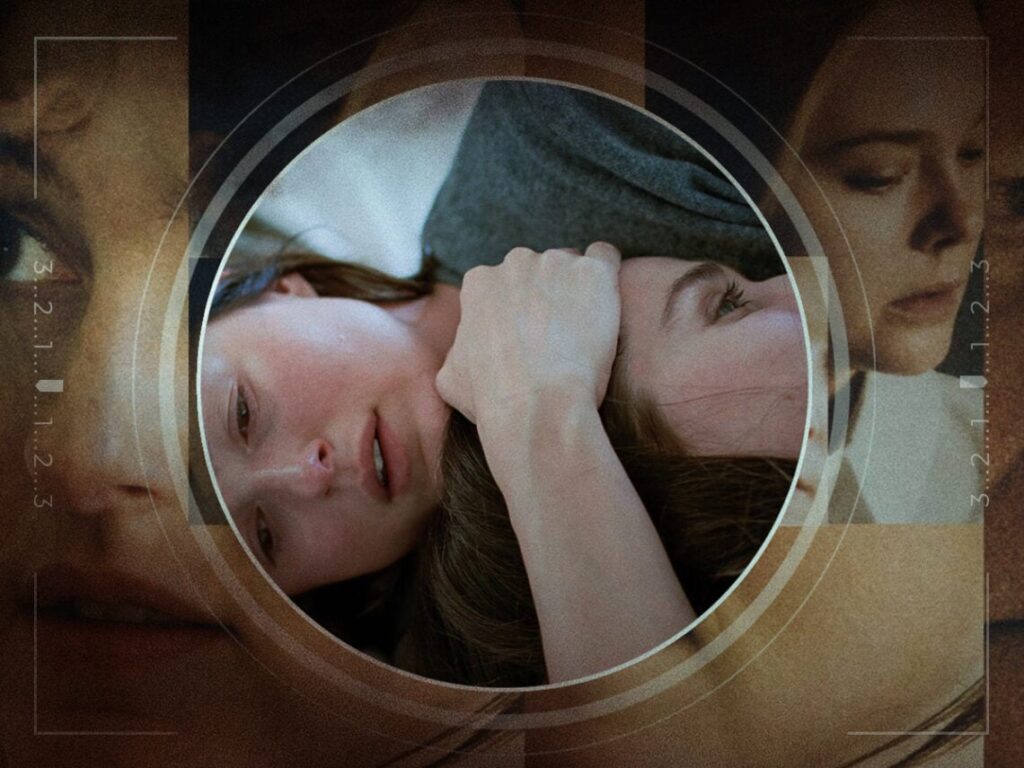
Hollywood loves to give us drama in the form of huge outbursts – arguments and large gestures – but here, the most impactful moments are the quietest, and the ones that feel most relatable to ourselves, like a tender conversation between Agnes and Nora, in which the latter questions how her sister didn’t turn out as “fucked up” as her, results in Agnes’ moving reply, “Because I had you.”
They sob gently in each other’s arms, opening themselves up to one another and silently acknowledging their grief. You don’t get much more honest than this, they are simply two sisters trying to figure themselves out, with the baggage of generational trauma looming over them, and it’s a pivotal moment in the film, but it plays out with ease.

Skarsgård is phenomenal because he lays his character, Gustav, out in the open. He’s not presented in a black and white fashion; he frustrates us, he moves us, and sometimes he confuses us. He doesn’t know how to communicate, so he presents Nora with a script. He wants her to play the lead in a story that seems to blur the lines between his mother’s traumatic upbringing and eventual suicide, and his desire to understand his daughter. She won’t listen, so he hires an American star, Rachel (played by Elle Fanning), to assume the role instead.
Dying her hair brown, Fanning starts to morph into an uncannily similar version of Nora, but she can’t get into the role, and no matter how hard she digs, she just can’t get deep enough. We come to understand how important this screenplay really is in connecting Nora and Gustav, if only they would properly let each other in. Can art help us to process trauma and communicate? Trier seems to suggest that while we can pin much of our understanding of life on art, we have to be open to accepting it. Art can’t solve everything, but it can certainly help, and slowly, the wounds start to heal, ever so slightly, but not without much coaxing.
The role of art connects Nora and Gustav, yet they still find it hard to really talk to each other about everything that has happened. Yet it’s art, specifically performance, that Trier suggests as the answer. Through words constructed, laid out on paper, read and re-read, then performed out loud, Gustav’s words become a mirror, reflected back at him via the very person he needs to hear them spoken by the most, the pair come back to each other.
There is so much beauty in Sentimental Value, from the personification of the family home, which somehow manages to avoid all forms of Hollywood sentimentality by existing with such charm, perhaps reminding us of our own childhood homes, to the incredible opening sequence, both comic and exhilarating in its pace.
This is a rather quiet film, and with moments sprinkled in that don’t seem to add much to the overarching narrative, like Gustav showing his nine-year-old grandson how to shoot a video on a phone or gifting him DVDs of The Piano Teacher and Irreversible (a great moment of comic relief), you get a real sense of humanism. It’s a well-rounded painting of a family, as heart-wrenching as it is humorous, and isn’t that the beautiful thing to be found in the tapestry of life that we so artfully try to weave?
[embedded content]
Related Topics