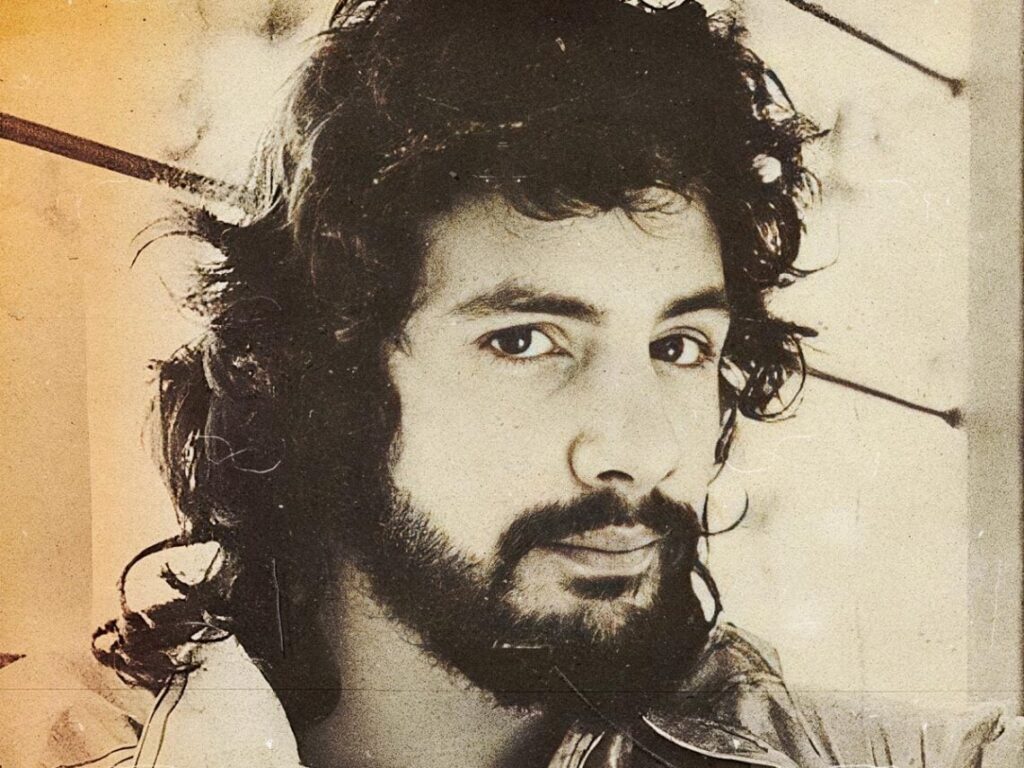
‘Father and Son’: How Cat Stevens’ classic captures the Russian Revolution
 Posted On
Credits: Far Out / Protest Photos
The political revolutionary foundations of Yusuf/Cat Stevens’ immortal ‘Father and Son’ is a fact often missed by even many longtime fans.
Everybody knows 1970’s Tea for the Tillerman’s cut – and only ever a B-side to ‘Moonshadow’ – was drawing from a certain kind of revolutionary spirit of the era. While the counterculture had begun to ebb with the 1960s over, a fierce generation gap was still fuelling many a family dinner table across the Western world between an exasperated parent and son or daughter on the cusp of adulthood, eager to follow a different path but bewildering to their loving yet straight family.
Stevens never had a hard time with his folks for pursuing music; his pursuit of pop stardom was embraced by his father, Stavros Georgiou, despite initial expectations for the teenage Stevens to join the family restaurant business in London.
But the young Stevens was able to report on the generational schisms dotted across countless households amid the 1960s’ political upending, lyrically setting the scene of a father and son’s to-and-fro on life’s priorities, one end pulling on finding a girl and settling down, the other end yanking toward life’s bigger yet not quite understood beckoning across the horizon.
It’s a moving song that gracefully explores both parties with compassion and empathy, ‘Father and ‘Son’ swiftly standing as one of Stevens’ canonical pieces. What passes as a universal poem on forging one’s destiny away from the ties of family and expectation, Stevens’ gentle folk number was, in fact, inspired by the Russian Revolution’s socialist upheaval over 50 years earlier.
Previous to his folk Tea for the Tillerman fame, Stevens was a minor pop sensation who caught the eye of the celebrated actor of the stage, Nigel Hawthorne, who was working on a musical project exploring the Russian Revolution through the eyes of a proletarian family’s clashing amid the insurrectionary maelstrom. Within this lyrical device, the seeds of ‘Father and Son’ were sown.
“Essentially, it was about Nicholas and Alexander, the last tsars of Russia, and against that there’s another story about this family in the farmland,” Stevens revealed to GQ in 2020. “And the father, of course, basically wants to keep things as they are, while the son is really inspired by the revolution. He wants to join… That’s why I’m able to represent both sides – though I feel that my preference, my emphasis, was on the son’s side, and the father’s arguments were not quite as strong as the son’s, which is interesting. Change is basically the theme of the song.”
Yet, a near-fatal bout of tuberculosis struck in 1969, forcing Stevens to spend months in Midhurst’s King Edward VII Hospital in recovery. During his medical care, a greater spirituality entered his life, a creative urge to move away from his orchestral productions, and a bout of around 40 written songs spelt a renewal for Stevens as an artist and human being. His and Hawthorne’s Revolussia project had been shelved indefinitely, but Stevens knew he had the sketches of a gem in his song bag.
The revolutionary fervour of post-Tsarist Russia found no trouble finding new meaning in a wider world and domestic sphere, both rocked by peace and love and the flower power battles, as well as exploring the deeper chasms that emerge between the generations since the dawn of time. “The song is a testament to the differences we represent to each other, especially in age and traditions,” Stevens reflected to Entertainment Weekly in 2020, touching on ‘Father and Son’s enduring power. “Traditions have a big impact on our lives, and sometimes you’ve got to walk away.”
[embedded content]
Related Topics