Why Shuggie Otis rejected The Rolling Stones: “I didn’t think twice”
 Posted On
(Credits: Far Out / Capsule Records)
It would be quite the job opening to see advertised: The Rolling Stones, looking for a new guitarist.
After a period of chaos, the band were looking for some stability again. For months and months before they cut the cords, Brian Jones had been letting them down. As he spiralled more into bad behaviour and substance abuse, he stopped being able to do his job, ending up being relegated to a different room with his amp turned off, kept away but kept distracted to the rest of them could keep working.
During that time, they called in Mick Taylor to pick up the slack. But relatively soon after, he quit. Suddenly, the ultimate job was up for grabs, and the quest to find the band’s new guitar player felt like a mythical one where, eventually, someone would be brought in as a new knight in the realm.
However, the story of the Stones’ various auditions is actually far less grand than that, and far less self-assured. In reality, it was busy with insecurity and worry. On the band’s side, they were on a deadline and needed someone good and someone quick. They didn’t want to keep wasting time with lineup changes, so they also needed someone committed.
On the other side, though, for the players auditioning, how does anyone get the courage to commit to something like that? Something that will likely completely take over and come to define your life? How do you bravely step into a band as established and famous as the Stones and feel confident that you’ll stand out or at least still keep your identity?
That’s what the list of try-outs were all thinking, and that’s why, eventually, Shuggie Otis snapped and turned them down.
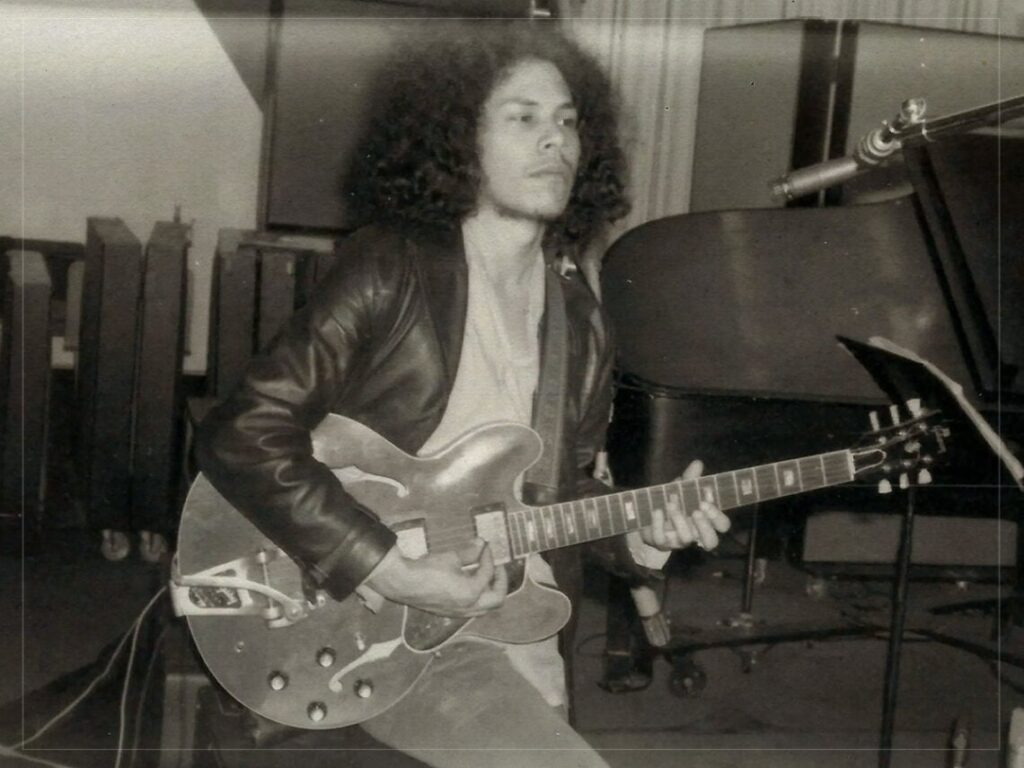
Alongside people like Peter Frampton and Jeff Beck, Otis was one of the other people brought into an audition, under the guise of a simple rehearsal. Guitarists were invited to come along and help them out for a session as the Stones sized them up. Otis fascinated the band. At 15, he was working with Frank Zappa. Once, he turned down the opportunity to work with David Bowie, or would later go on to turn down Quincy Jones, declining his offer to produce an album simply because Otis would rather do it all himself.
He was a super talent, and one that was devoted to doing it his way. So precisely what intrigued the band was also the reason why he rejected them.
He recalled the moment when a friend called with the news, “‘Hey, man, I’m sitting here with the Stones right now, and they want you to join the group.’ I didn’t think twice. I didn’t say no, like, ‘Are you kidding me?’ I didn’t say it like that.” But instantly, Otis knew it wasn’t his path.
“I told him I had my own group now, and I was doing my own thing. I didn’t want to be with the Rolling Stones. I couldn’t see myself as a Rolling Stone,” he said, despite admitting that he was a huge fan of the band.
“I was never really one to be a sideman. I always wanted to be on my own,” he said as one reason, but the other was simple – “I’m not going to try and be one of the people taking the place of Brian Jones.”
For many of the auditionees for the band, it came down to that. It was also part of the reason why Taylor left, stating that he always felt like a “junior citizen in the band of jaded veterans” – always the new kid, never matching up to the shadow of what was lost.
[embedded content]
Related Topics