The one song Led Zeppelin struggled to record: “I actually wrote it in rehearsal”
 Posted On
(Credits: Far Out / Alamy)
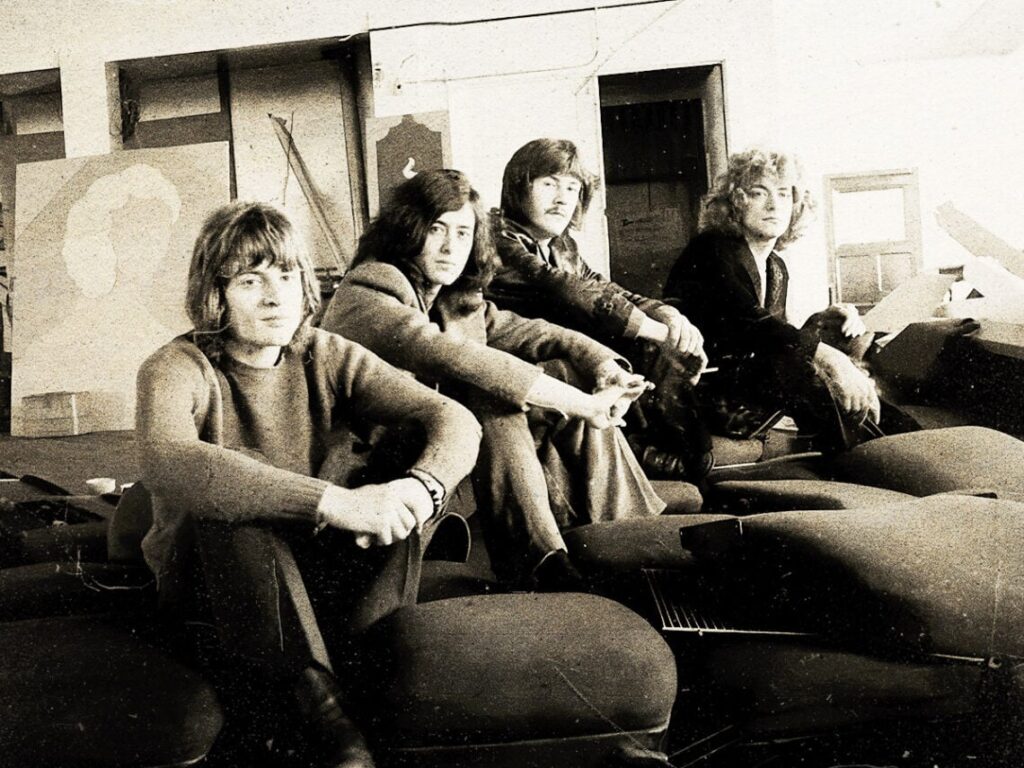
Usually, a band has one or two bright musicians, and the rest of the band is illuminated by them. But, in a strange set of events, every member of Led Zeppelin could have been justifiably called a virtuoso.
Throughout their tenure together, every member had their moments of performing something ingenious, from Robert Plant’s guttural howls at the end of ‘How Many More Times’ to Jimmy Page’s penchant for coming up with one fantastic riff after the next across all of their albums. While every member of Zeppelin could handle anything thrown at them for most of their tenure, one riff from John Paul Jones threw them for a loop in the studio.
It goes without saying that, as a unit, there is perhaps no better rock band than Led Zeppelin. But the most bizarre fact is that if you were to split them up and analyse each member on their own, then you would find one of, if not the finest players of their respective instrument. Plant is an icon of rock singing; few guitarists can hope to match Jimmy Page. John Paul Jones is an underrated rhythm machine, while John Bonham is the forefather of rock drumming. Coming together, they were a powerhouse.
When the group were first breaking themselves in on their debut, most of their material didn’t stray past the conventional blues structures that the British hard rock scene had been used to. Although there were exotic elements sprinkled into songs like ‘Black Mountainside’, the following albums would see the band taking on various musical struggles, like the orchestral sounds of ‘Friends’ or the hazy atmosphere captured on ‘What Is and What Should Never Be’.
Once they were met with spite from the critics, their fourth outing would be the moment they called their bluff. Since the media thought that Zeppelin was all hype, the band released their fourth album with no fanfare, putting it out into record stores, before quickly turning it into one of the most successful records of their career.

Kicking off the album with a flurry of distortion, John Paul Jones was responsible for the central riff of ‘Black Dog’, which had an unusual time signature to work around. Occasionally swapping out different beats and changing tempo, Page and John Bonham initially had difficulty settling into the groove. Then Bonham came up with an idea.
Rather than play it off the floor, ‘Bonzo’ recorded a click track with his sticks in time with the riff, which would be fed into everyone’s headphones so no one would slip up. Considering how complicated the riff was, it makes sense why Plant’s vocals are reserved for the moments where there’s no instrumentation, as the rest of the band keeps on their toes to return to the next section.
Even with the massive head-trip that went into learning the song, it’s easy to get into the groove they create in those sections. While every member is locked into the groove, the subtle intricacies of their playing are on full display, with Bonham playing slightly behind the beat, Page staying one step ahead of the beat, and ‘Jonesy’ playing everything straight up the middle.
But studio sessions are a lot easier to control than performing on stage. If you have ever tried to complete a simple task which you had been handling as easy as exhaling only yo, under the gaze of a manager or even a friend, suddenly be rendered incapable of doing it, then just imagine the pressure one faces when trying to play a tough song under the watchful eyes of thousands of audience members.
After taking to the road, Zeppelin would turn the song into a staple of their live show, with Plant holding the crowd in the palm of his hands for a few seconds before the rest of the band came screaming in behind him. Then again, Zeppelin didn’t have time to pat themselves on the back for writing something so complex.
“I actually wrote it in rehearsal from Jimmy’s house on the train,” explained John Paul Jones. “My dad was a musician and he showed me a way of writing down notation on anything. And so I wrote the riff to ‘Black Dog’ on the back of a train ticket, which I unfortunately don’t have.”
Across their next album, Houses of the Holy, Zeppelin were looking to push themselves even further, with Page turning in the ethereal ballad ‘The Rain Song’ recorded in an open tuning and offering up another riff with an odd time signature, ‘The Ocean’. While most artists are comfortable in conventional 4/4, ‘Black Dog’ is the ultimate example of how cool it can sound when an artist decides to take a chance on something different, something a bit more baroque.
[embedded content]
Related Topics
The Far Out Led Zeppelin Newsletter
All the latest stories about Led Zeppelin from the independent voice of culture.
Straight to your inbox.