The Led Zeppelin song John Paul Jones called homophobic: “We were friends”
 Posted On
(Credits: Far Out / Alamy / Annie Spratt)
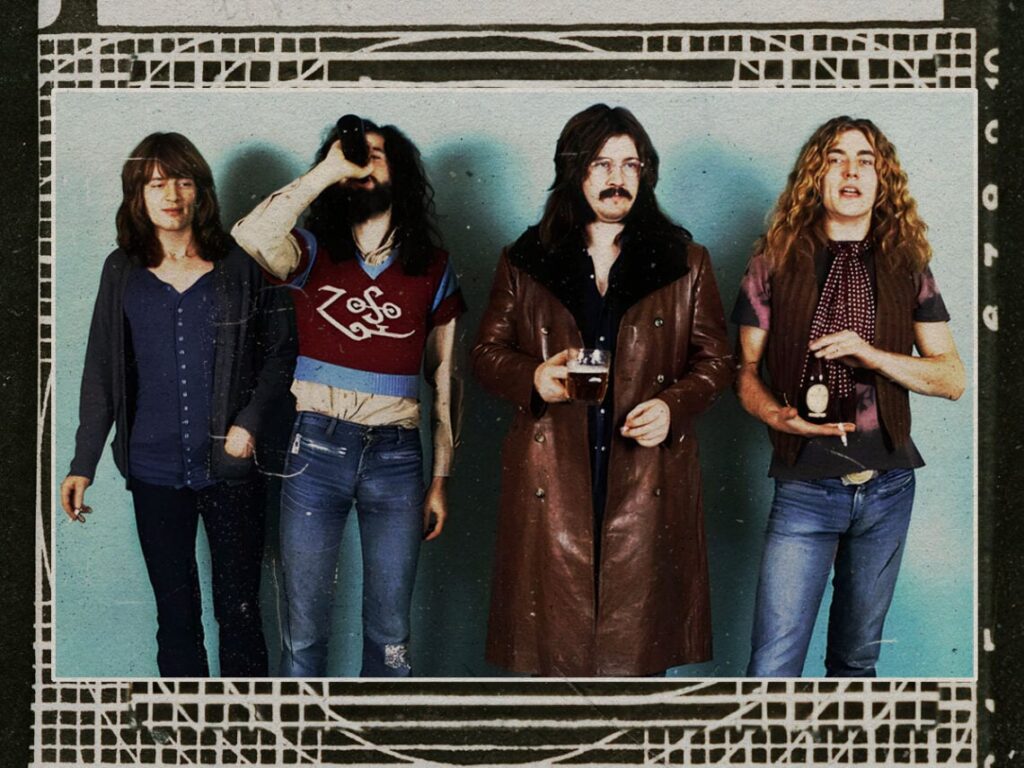
The world of rock music is fractured beyond belief. Even within bands, often assembled as forms of tight-knit gangs with sonic dispositions, would find themselves at odds with one another. Divided by experience, the members of Led Zeppelin were bound to disagree from time to time.
On the one side, you had Jimmy Page and John Paul Jones: metropolitan professionals born and raised on the periphery of the big smoke. On the other hand, John Bonham and Robert Plant: proud Midlanders from small towns in the Black Country. More often than not, these two halves nestled together rather well, generating a sound simmering with both formal virtuosity and raw talent.
Of course, there were times when the likes of Robert Plant and John Paul Jones were reminded of just how different they really were. ‘Royal Orleans’ from Zeppelin’s 1977 album Presence provides the perfect example.
Our story begins on a particularly debauched night in New Orleans. Having made themselves at home at the plush Royal Orleans Hotel in the city’s French Quarter, Led Zeppelin decided to explore the city’s world-famous haunts and ended up in a notorious drag bar where a member of the band allegedly became entangled with a drag queen known as Whiskers. “And if you take your pick/ Be careful how you choose it,” Plant sings in ‘Royal Orleans’. “Sometimes it’s hard to feel it bite.”
It’s more likely that the name of Jones’ amour was Stephenie, with whom the band were already friendly. After smoking a joint late one night, the pair fell asleep together, offering Plant an opportunity he couldn’t resist. He would use ‘Royal Orleans’ to tease Jones, detailing the interaction in lines like: “Man I knew went down to Louisiana/ Had himself a bad, bad fight/ And when the sun peeked through/ John Cameron with Suzanna/ He kissed the whiskers, left and right.”

The story was later featured in Hammer of the Gods by Stephen Davis, who John Paul Jones went on to describe as having got “all the facts wrong”. The song may have featured a credit for all four members of the band, but it would seem the contents split the group.
In a sprawling 2001 interview, Jones discussed the song and criticised Robert Plant’s attempt to mock him with ‘Royal Orleans’. “Oh, that was Robert in his usual homophobic manner,” he began. “I don’t know what…you see, the only trouble with that book, that stupid book, was that it got all its facts wrong. It got all the stories the wrong way around. Part of that, it wasn’t funny. I mean, some of the stories were actually hilarious, but the way the book reads is, ‘What a bunch of miserable bastards we are!’”
Jones would go on to clarify that “everybody knew who those [drag queens] were. They were friends of Richard [Cole]’s. And yes, we knew they were transvestites. We were friends.” Jones and the rest of the band were assimilated into this part of the world and the track might have been meant as a celebration of the area.
He certainly remembered the environment: “Her name was … Her name was … Stephanie! We’d see her every time we’d go to New Orleans. But Robert was a bit provincial. They weren’t like big city boys. They don’t like all that sort of thing. Richard and Jimmy and I … They were friends of the band, for God’s sake, you know. And then this idiot, Steve Davis, gets it all mixed up.”
Jones then accused Davis of making a story out of “stuff that he didn’t know”. He would even claim that it was “another member of the band who found himself in situations where they didn’t know it was a boy, and it certainly wasn’t me.” Jones refused to elaborate.
Instead, he concluded by describing Plant as “a bit homophobic in those days,” something he put down to Robert and John Paul Jones having a “sheltered upbringing as lads”. The deliberately down-punching track ‘Royal Orleans’ certainly wouldn’t wash today; that’s for sure.
[embedded content]
Related Topics
The Far Out Led Zeppelin Newsletter
All the latest stories about Led Zeppelin from the independent voice of culture.
Straight to your inbox.