“The epitome of a guitar hero,” according to Lars Ulrich
 Posted On
(Credits: Far Out / Apple Music)
To be a rock star is not to forget your roots. Like every other musician who became famous, it is expected that your favourite musician is still a fan at heart. After reaching the heights of heavy metal giants, Lars Ulrich never stopped being a fan of rock music.
Even when Metallica started to achieve success beyond their wildest dreams, Ulrich was still the same snot-nosed kid psyched to see his favourite bands like Diamond Head and Motörhead play night after night. Though he may have gotten his start with metal bands like Black Sabbath, Ulrich’s favourite hails a bit left of centre from hard rock.
Along with the mountains of bootleg tapes that he collected over the years, Ulrich always had a special place in his heart for Deep Purple. Though they might have been playing the same kind of crowds that most late 1960s bands played during the ‘Summer of Love’, Jon Lord and Ritchie Blackmore always had something bigger in mind than classic rock and roll.
After getting Ian Gillan and Roger Glover into the picture, the band started redefining how heavy rock should be played. Blackmore became one of the masters behind writing guitar riffs alongside Jimmy Page. Although Blackmore’s parts tended to be simple on records like Machine Head, Ulrich always held him as the pinnacle of what a guitarist should be.
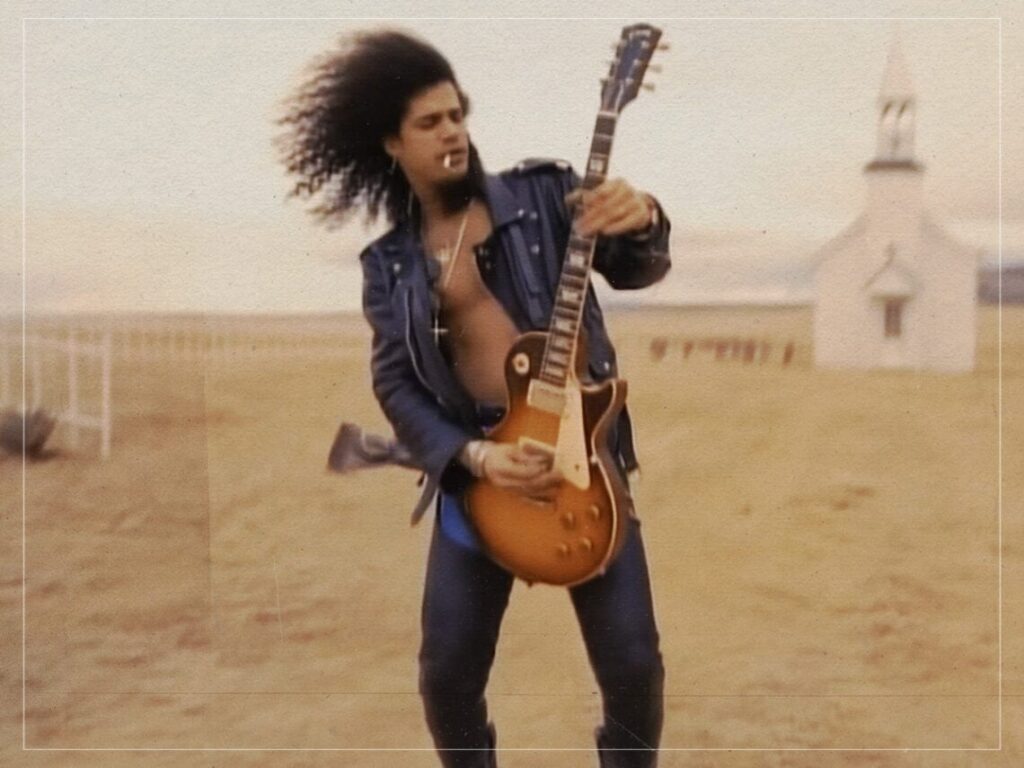
When speaking to Louder, Ulrich recalled seeing Deep Purple for the first time and being knocked out by Blackmore’s playing, remembering, “The first concert I ever went to was Deep Purple. I was nine years old, and I still can close my eyes and see him taking the black-and-white Stratocaster and playing it with his foot or grinding it against the PA speakers.”
A seismic moment for any rock music fan, Ulrich would be entirely shaped by the experience. A young boy watching a monolith of rock deliver some wild moves and create ear-piercing sound, it must have been an otherworldly experience for the young boy. Ulrich admits, “That left an impression on me. I think he was the best guitar player of that generation and, for me, the epitome of the guitar hero”.
Even though Blackmore could create a spectacle onstage with songs like ‘Smoke on the Water’, the good times with Purple weren’t meant to last. After changing to a new sound with vocalist David Coverdale and bassist Glenn Hughes, Blackmore became uninspired, eventually creating the band Rainbow to further his interest in medieval forms of rock music.
Although the band was meant to be a focused unit, Blackmore was always the main attraction, playing different Arabic scales on the solos to songs like ‘Stargazer’, which would lay the groundwork for the power metal stylings of bands like Blind Guardian later down the line. It certainly left an impression on Ulrich’s approach to writing songs, always dictating the structure of Metallica songs with James Hetfield based on the classic songs he banged his head to when he was a child.
That internal fire didn’t dwindle over the years, as evidenced by Ulrich’s induction of the band into the Rock and Roll Hall of Fame. Aside from his massive praise of Blackmore, he marvelled at the musicianship of every member, saying, “Deep Purple were a beautiful contradiction. [It was] like you just walked in on musicians at the top of their game, jamming one classic after another with raw intensity as if they were in a garage playing for no one but themselves, yet at the same time casting a thousand yard stare into the bowels of the arena”.
Deep Purple didn’t envision being a rock band initially, but what they paved the way for led to some of the most intense metal music ever created.
[embedded content]
Related Topics