‘More Specials’: The Specials’ sophomore album that beat their debut
 Posted On
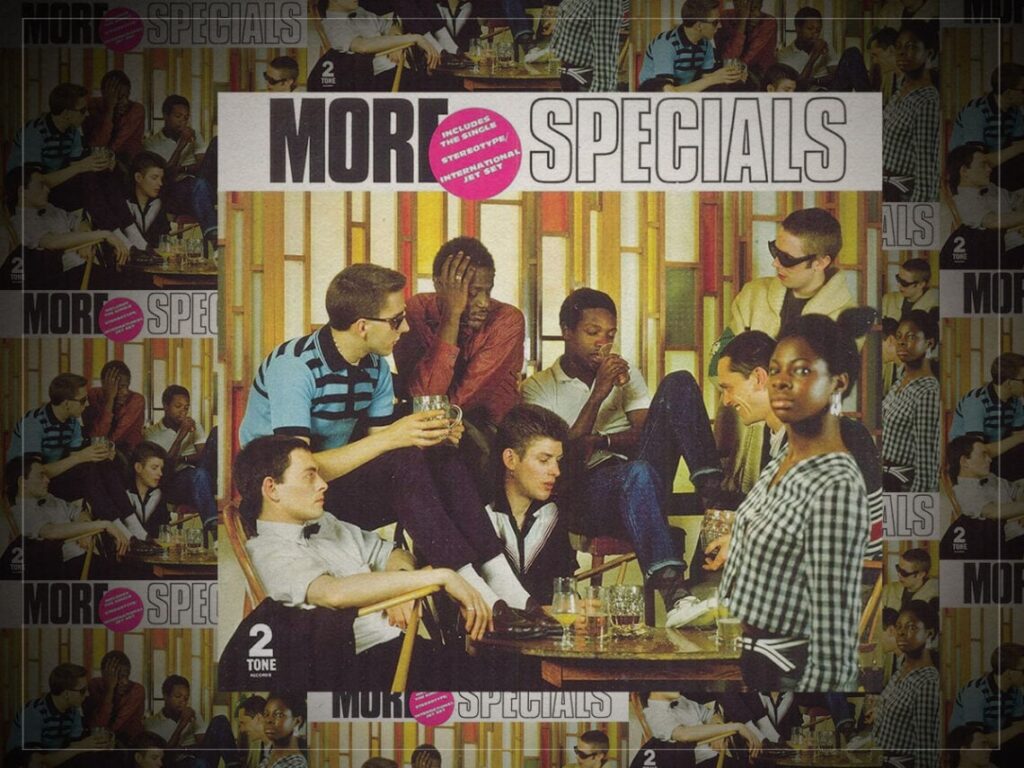
(Credits: Far Out / Album Cover)
It’s now 45 years since The Specials dropped their superior sophomore album, a record radically different from their debut that reached the pinnacle of the ska outfit’s creative ambitions while also accelerating their internal fractures.
Born from punk’s cataclysmic impact on the UK music scene, ska revivalism would form one of the essential sub-cultural patchworks that disparately forged the myriad youth movements of the 1970s’ tail-end alongside the New Romantics’ fashionista synthpop and the beer-swigging rockers lost in Britain’s heavy metal new wave.
Standing with equal primacy was the two-tone explosion sparked in Coventry. Distilling a love of the previous decade’s Jamaican reggae fusions with punk’s urgent edge, Jerry Dammers’ fledgling 2 Tone label would score some of the era’s most vital acts.
Scoring an innately working-class expression entering pangs of insecurity by the 1970s’ close, The Specials boldly pursued a racially united musical and cultural movement, firmly rejecting the National Front’s racist lurk on the ska scene’s fringes, subsuming some of the skinheads amid the country’s malaise-ridden fog. 2 Tone would unleash a spectrum of bands that served as rocksteady reporters of UK decline, The Beat and Selector exploring the day’s social ills, while Madness offered a lighter vignette of British life, albeit touching on heavier themes around ‘nutty’ numbers like ‘House of Fun’.
But the two-tone scene, and its broader ska satellites like UB40, all coalesced around The Specials. Preceded by the ‘Gangsters’ single, The Specials’ eponymous debut LP in October 1979 would stand as the defining ska revival statement, pushed by their socially conscious cover of Dandy Livingstone’s originally titled ‘Rudy a Message to You’, and riding a fiercely joyous live reputation since their founding two years earlier.
Dropped five months into Prime Minister Margaret Thatcher’s tenure, The Specials offered the precarious youth a cathartic counter to the dismal economic battering the Conservative Party was signalling, a lively ska bounce that still tapped into the era’s disenchantment as embodied by frontman Terry Hall’s droll nonchalance.
Yet, such instant stature came with the trappings of the business. Six months of intensive touring across the US and Europe had pushed The Specials to exhaustion, with further live dates insisted upon by 2 Tone backer Chrysalis Records. Releasing ‘Rat Race’ as a stop-gap single, the band began preparations for their eagerly awaited sophomore album in the summer of 1980, hitting creative clashes regarding its direction. Eager to avoid the lampooning lapses of 2 Tone taken with Bad Manners’ cartoon ska gooning on Top of the Pops, Dammers looked to idiosyncratic places for new sonic ideas, an obsession he would lose himself to and test the band’s patience.

“On that tour in America, I was listening to music in the hotel bars and elevators,” Dammers told Spin in 2009, explaining, “Vibraphone music in elevators. Obviously, this was classed as rubbish. I don’t know if it was my state of mind, because I was so zonked, but it struck me as a really weird, psychedelic music, which is now called lounge or exotica. It’s been rehabilitated, but at the time, to say you actually liked that music was mad. It completely freaked out some of the band.”
No one was more “freaked out” than Roderick ‘Roddy Radiation’ Byers, who was earnestly pursuing rockabilly power pop over lounge muzak, but while amalgamating the various members’ songs and sensibilities, Dammers’ embrace of spooky electronics would dominate 1980’s More Specials.
Enthusiastic to step into a new aural terrain, Dammers embraced the studio as an instrument in the vein of Pet Sounds or even Sgt Pepper’s Lonely Hearts Club Band, favouring multiple takes and overdubs while sharing production duties with former engineer Dave Jordan, in contrast with Elvis Costello’s live capture of the band’s performance on The Specials recording process.
What followed was a colourful, slightly strange, and piquantly eccentric second LP that strayed into infinitely more intriguing realms. While their ska foundations still shine through the brittle electronic washes, More Specials presents eerie cuts like the explosive ‘Man at C&A’, a nuclear red alert slice of ska shlock horror caked in Scientist dub reverb and explosions triggered by John Bradbury’s synthesised drums.
Skewed sonic weirdness hovers subtly behind more conventional numbers like ‘Pearl’s Café’ and ‘Hey Little Rich Girl’, but More Specials’ centrepiece is ‘International Jet Set’s’ skulking oddity. Layered with oodles of chintzy keys and cheap, organ rhythm boxes, Dammers scores a claustrophobic bossa nova menace detailing the helpless resignation to an impending plane crash via dollops of tinny exotica and black humour.
More Specials’ prickly paranoia wasn’t just a creative guide for Dammers. Internal grievances would reach a boiling point the following year, spelling the end of the ‘classic’ line-up and seeing several Specials incarnations over the years. Eking out 1981’s ‘Ghost Town’ as the band’s final ‘Mk I’ hurrah, the immortal soundtrack to the UK’s biting unemployment and barren political landscape owed everything to the novel experiments forged with More Specials.
Its dark lyrical observations and listless pop conjurings was the ultimate realisation of Dammers’ ingeniously mad efforts to push The Specials toward a deeper sense of alienated dread while still sporting a wry smirk. It’s spooky, haunted house whine channelled straight from the bizarre elevator speakers that permeate their gloriously strange sophomore record, as it had Dammers’ mind in the US.
Related Topics