Who would be on a modern ‘Trainspotting’ soundtrack if it were made today?
 Posted On
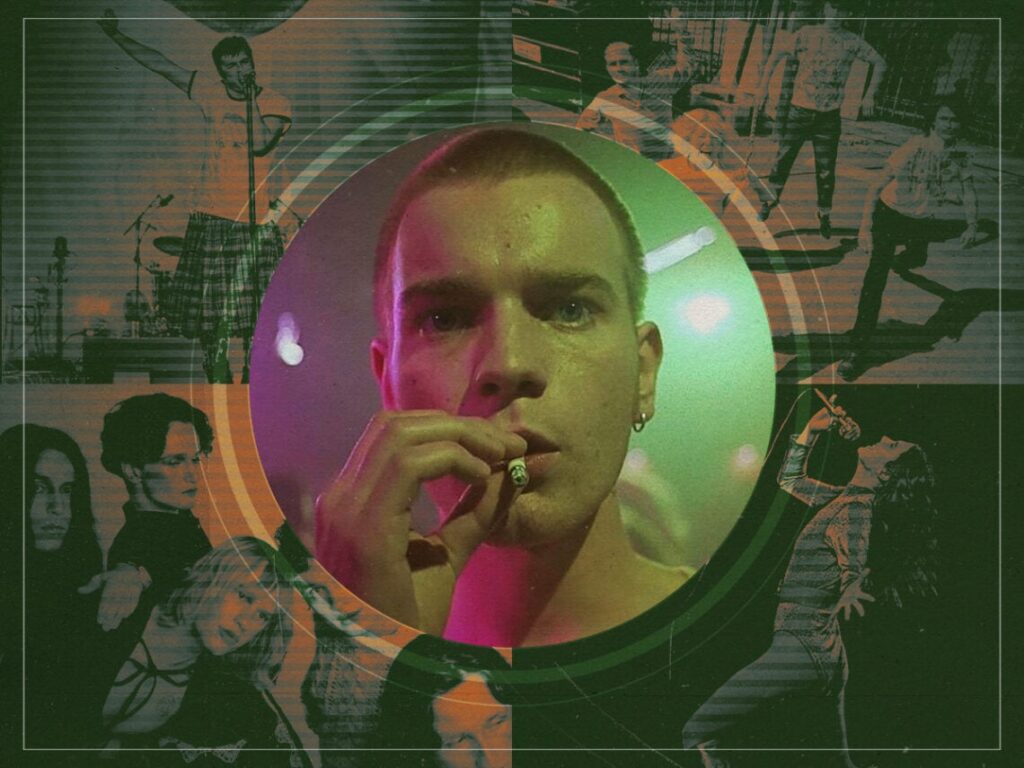
(Credits: Far Out / PolyGram Filmed Entertainment / Album Cover / Georgina Hurdsfield / Izzy Leach)
“It’s me or Iggy Pop, time to decide”. – Tommy, Trainspotting
Music and film go hand-in-hand like salt and pepper, acid house and E’s, or hangovers and Irn-Bru. From the earliest days of the silver screen, music has always been essential, but few soundtracks have ever come close to rivalling the all-encompassing brilliance of the 1996 cult classic, Trainspotting.
Punk writer Irvine Welsh’s 1993 novel took major inspiration from the musical landscape of the period, particularly the revolutionary scene of acid house, which blossomed across the UK during the late 1980s and early 1990s. So, when it came time for Danny Boyle to translate Welsh’s vision onto the screen, it is no surprise that music played a similarly colossal role. In fact, the very first thing you hear in the film is that iconic drumbeat from Iggy Pop’s ‘Lust For Life’, arriving before any dialogue, credits, or even the first shots of our junkie protagonist, Mark Renton.
Pop’s influence on the film doesn’t end there. Throughout the story, the group routinely discuss their adoration of the punk godfather, and a Stooges-era poster of Pop hangs proudly in Tommy’s flat during the early part of the film, torn and disheveled when it comes to the character’s tragic demise later. Alongside, Trainspotting bears the hallmarks of Pop’s early contemporaries, like Lou Reed and Brian Eno, but for the most part, the sonic railroad was rooted in the modern sounds of British indie.
Britpop reigned supreme over the pop charts as guitar-led indie rock was all the rage in the 1996 music scene. As such, the likes of Sleeper, Pulp, Elastica, and Blur all make appearances on the soundtrack album, and Oasis were reportedly asked, but refused to be included in a plot which they assumed was literally about spotting trains. Nevertheless, the effect of including those Britpop titans was that the Trainspotting soundtrack exists as a perfect time capsule for that period in British music history.

Not only did it perfectly capture the tone and atmosphere of the film itself but reflected the grassroots power of the British music industry during one of its most prolific and important eras, hailing the soundtrack as among the greatest of all time, as a result. Which raises the speculation: who would be on the Trainspotting soundtrack if the film were made today?
To answer that question, we’ll start with the inevitable: Iggy Pop stays. He wasn’t exactly a modern artist back in 1996; the ‘Lust for Life’ singer is still on tour to this day, and it is impossible to imagine any incarnation of that iconic opening scene soundtracked by anything else. There are a few other inclusions from the original soundtrack that could easily be carried over into the modern version, with Lou Reed’s ‘Perfect Day’ and Underworld’s ‘Born Slippy’ immediately springing to mind.
In terms of the album’s Britpop leanings, though, the likes of Blur, Sleeper, and Elastica are out. There is an argument for including Oasis, given their enduring relevancy over British rock, and it would help in writing one of the wrongs of the original production back in 1996. What’s more, Pulp have recently experienced something of a renaissance thanks to the incredible record More, released earlier this year, so Jarvis Cocker’s group could certainly reappear on the revised soundtrack.
As far as modern guitar-led indie rock is concerned, obvious choices for an up-to-date incarnation of the album include the likes of Fontaines DC, Amyl and the Sniffers, or even Idles, who recently exercised their soundtracking muscles in Darren Aronofsky’s Caught Stealing.
Dance music and acid house were, as we mentioned, essential to the atmosphere of Trainspotting, so the soundtrack can’t all be guitar-led. Confidence Man would seem a good fit for some of those club scenes, with specifically their more recent material harking back to the golden age of dance music and club culture, and their previous tours alongside New Order connecting them to the original soundtrack to some degree.
Although they were around at the time of the original film, The Prodigy seem like a natural inclusion too, given both their lasting legacy within rave culture and the fact that they remixed ‘Lust for Life’ for T2: Trainspotting in 2017.
In fact, the controversial Trainspotting sequel did get some things right in terms of its soundtrack, particularly with regard to Fat White Family, Wolf Alice, and Young Fathers, who would surely have made the cut if they were around in the mid-1990s. That soundtrack also featured The Rubberbandits, but for our proposed modern interation, we are going to switch them out for another Irish rap outfit, Kneecap, whose adrenaline-fueled energy and unwavering defiance would make them a shoe-in for the film.
For our final batch of recruits, we must look to Trainspotting’s roots in the glorious surroundings of Scotland. The film might have been set in Edinburgh, but the majority of it was shot in and around Glasgow, a city which has always tended to eclipse the capital in terms of musical quality. Primal Scream flew the flag for Glasgow on the original soundtrack, and countless incredible artists have walked the streets of the city since then: Belle and Sebastian, Franz Ferdinand, and Mogwai being only a handful of examples.
Looking to more recent times, though, Glasgow’s rapidly rising Walt Disco and their alternative glam-pop stylings have earned their place in our hypothetical soundtrack. Alongside them, Rascalton should step in for some Scottish punk rep, even if the band itself seems to have faded since their heyday back in 2018 and 2019. Regardless, both these groups would perfectly capture the energy and cult appeal of the original soundtrack, while placing it firmly into the 21st century.
Ultimately, recapturing the spirit of the original Trainspotting soundtrack album is a pretty tall order. Still, the idea of curating a modern incarnation is an interesting exercise in reflecting on just how much ground the music industry has covered since the mid-1990s and, in many other ways, how similar our tastes remain.
A modern Trainspotting soundtrack:
- Iggy Pop – ‘Lust for Life’
- Fat White Family – ‘Touch the Leather’
- Fontaines DC – ‘Boys in the Better Land’
- Wolf Alice – ‘Sky Musings’
- Kneecap – ‘Sick In The Head’
- The Prodigy – ‘No Tourists’
- Rascalton – ‘Police’
- Pulp – ‘My Sex’
- Oasis – ‘Hello’
- Young Fathers – ‘I Saw’
- Confidence Man – ‘Far Out (Orbital Remix)’
- Amyl and the Sniffers – ‘Maggot’
- Lou Reed – ‘Perfect Day’
- Underworld – ‘Born Slippy (Nuxx)’
- Walt Disco – ‘Selfish Lover’
Related Topics