1960: The year that changed horror forever
 Posted On
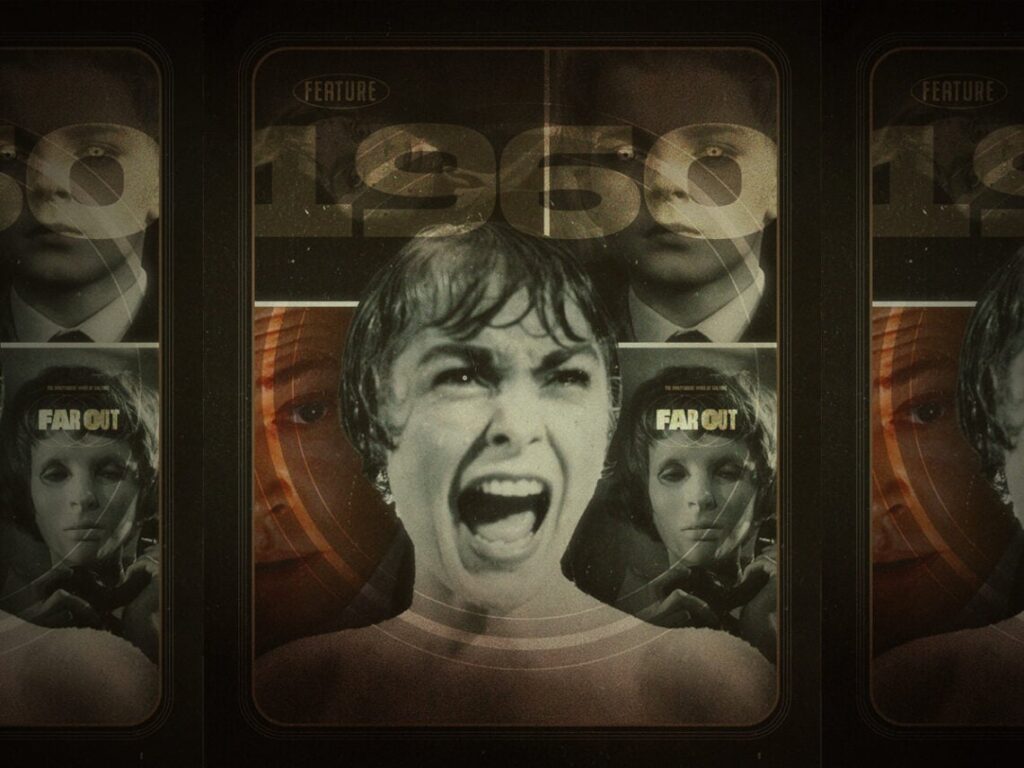
(Credits: Far Out / Paramount Pictures / MUBI)
The experience of watching a scary movie can often be unlike and unprecedented to any other kind. What other type has us too scared to go to the toilet or be home alone afterwards, picking faces from the shadows of appliances?
While we know we’re watching something fictional, it’s hard not to get caught up in the ‘what ifs’ that horror movies present us with. What if that shadow that just went past your window isn’t an innocent passerby, but a deadly serial killer or even a ghost? Horror movies can put ideas in our minds that we didn’t even know could be scary, like children or, in the case of It Follows, sex.
Horror’s come a long way since the early days of cinema, when it was mostly an excuse to muck about with odd camera tricks and choppy edits. Over the years it’s got bloodier, nastier, sexier, and far more unhinged, thanks partly to Hollywood loosening its grip on censorship in the late ’60s, and partially to a handful of groundbreaking films that kicked the door wide open for the carnage that followed.
I’d argue that 1960 was the most important year in horror history, with the release of several key movies that have come to play an intrinsic role in shaping the genre’s violent landscape. Let’s start with the biggest of all, Alfred Hitchcock’s Psycho. Starring Anthony Perkins and Janet Leigh, this is the one that most people will have seen; after all, it is a stone-cold classic.
The movie was a huge moment for the genre because it teased the beginnings of the slasher genre, which would come to fuller fruition in the 1970s with further influence from the likes of giallo movies, splatter, and exploitation cinema. But Psycho was endlessly important, with its shower stabbing sequence being considered as incredibly graphic at the time (although it feels so tame today).
You see the blood circling the drain and the knife poking at Leigh’s naked stomach, and for one of the first times, a horror movie scene felt scarily like it could happen to anyone in the audience. The black-and-white cinematography actually made the blood appear more realistic, and the cold shock of killing off who we assumed to be the main character in such a mysterious and unsuspecting way truly changed everything.

Another British director made a monumental contribution to horror a few months before Psycho with a proto-slasher effort: Peeping Tom. Directed by Michael Powell, the film was a shock to many critics who weren’t aware that the highly acclaimed director could make such an apparently sleazy and perverted movie. In Peeping Tom, we see a man kill women for his own sick pleasure, recording the events and later making his footage into tapes for him to watch back.
It’s certainly got many Hitchcockian elements to it, but Peeping Tom and Psycho’s similar release dates was nothing more than a coincidence. It’s a shame that Powell’s film was rather overshadowed by Psycho, however, because it is a truly terrific movie that has inspired many horror fans, namely through its use of POV shots.
We are closely tied to the killer from the beginning, his identity no secret, so we become guilty voyeurs ourselves. The concept of POV shots or a killer filming their murders has been used in everything from Halloween to Scream 4, and it’s a technique that Peeping Tom certainly pioneered.
Meanwhile, over in Italy, Mario Bava released Black Sunday, a moody, gothic film that blazed a trail for the country’s imminent rise to horror domination. Before the giallo sub-genre became popular, Bava’s film blended sexually-charged imagery with violence through Barbara Steele’s iconic performance as a woman scorned. It was a pivotal moment for Italian cinema generally, because it marked an increased level of violence that soon found face in other genres. Yet somehow, Black Sunday remains more of a niche pick for even non-scary movie aficionados, despite its mammoth influence on modern horror filmmakers.
1960 also gave us Village of the Damned, in which creepy children with platinum blonde hair and telekinetic powers terrorise a small British village. While the film didn’t have as much influence as the aforementioned movies, it’s still a fantastic piece of horror that arguably paved the way for the folk horror of the coming years, like The Wicker Man and The Blood on Satan’s Claw. Sure, these films are much bloodier and deal with an older vision of England, but what all of these movies have in common is the disruption of British countryside communities through unsuspecting means.
France delivered an iconic horror movie in 1960 in the form of Eyes Without a Face by Georges Franju. Of course, it inspired the well-known Billy Idol song, but it’s arguably one of the most memorable mask horror movies of all time. Besides The Phantom of the Opera, can you think of many masks before Eyes Without a Face? It certainly inspired the likes of Halloween and, more recently, Holy Motors and The Skin I Live In, with its uncanny mask that hides the disfigured face of a young woman whose father goes to extreme measures to try and ‘fix’ her.
Something was in the water in 1960 to cause horror to reach expectantly towards the violent and creative realms. With the end of the 1950s, the post-war generation was opening up to new ideas and belief systems, reflected in the decade’s political protests for civil rights and feminism. Naturally, that change found its way into the films being made at the time.
While mainstream cinema didn’t become more radical until the latter half of the 1960s, these films showed that change was coming. It wasn’t going to be much longer until more blood would fill our screens and horror would prove itself to be one of the most compelling genres in all of cinema.
[embedded content]
Related Topics