How one movie shaped Christopher Nolan’s style: “It’s the most incredible thing”
 Posted On
(Credits: Alex J. Berliner / ABI Images)
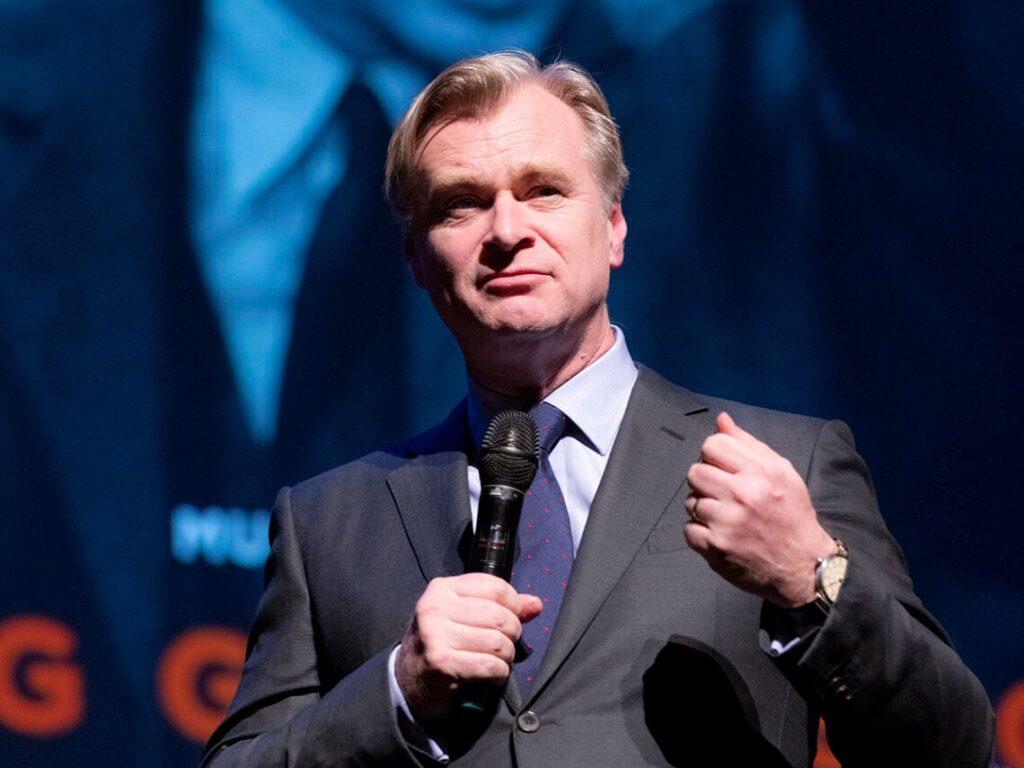
Christopher Nolan has spoken at length about his many influences over the years, pulling strands from all his favourite works to create a smorgasbord of references within his own filmography. From his love for Ridley Scott, Stanley Kubrick and Terrence Malick, Nolan has always made sure to praise his heroes and give credit where it’s due, citing the impact of films like The Thin Red Line and Alien on crafting his own visual spectacles.
However, there is perhaps one film that has remained the biggest influence of all, with the director’s shooting style seeping into his cinematic perspective.
Alfred Hitchcock is described by many as one of the few true masters of the medium, pioneering a new style that incorporated the audience into the picture through his voyeuristic style, while also honing the art of creating suspense. Whether it be more commercial pictures like Rebecca, spy stories like North by Northwest or murder thrillers like Vertigo and Psycho, the director was once the shining star of the British film industry.
It comes as no surprise that Nolan, a fellow Brit, looked up towards his work and sought to mirror some of his techniques, with the director describing his love for the cinematography of Psycho in particular and the shot that has stayed with him forever.
When discussing Hitchcock’s unique perspective, Nolan said, “It’s the most incredible thing, what Hitchcock’s done; he’s taken our point of view and flipped it. How has he done that? Simply by showing you and making you complicit in the difficulty of the task of cleaning up”. Through this style, he makes the audience more involved in the inner turmoil of the story, making you an accessory to the crimes that take place and therefore heightening your sense of fear and involvement in the plot.
Nolan expanded on this and the film that pioneered this effect through its camera work, saying, “I think for me, Psycho’s probably the Hitchcock film that’s the most beautiful, photographically. If you took any frames from Psycho, they would be immediately striking. I mean, Vertigo has cinematic beauty, obviously, but it’s not pretty, but in Psycho, you had that beautiful close-up of Norman Bates’s eye; that was the thing I remember from that, just looking through the peephole. It’s kind of exquisite”.
He added: “Everything you do as a filmmaker is about point of view. Where you put the camera. It’s the process I am going through as a filmmaker. When I am deciding how to shoot something on the day, whose point of view is it? Where do I want the cameras? It’s always that”.
Perspective is key when it comes to the art of cinematography, with framing and position becoming the key tools in any DP’s toolkit. The way a story unravels visually is crucial in how we feel it, with the immersive shooting style of Psycho bringing us into the inner world of the main character and the psyche of a killer. It might be unnerving, but this is why his legacy has persevered for so many years and continues to inspire those working today.
[embedded content]
Related Topics