‘Pet Sounds’: The album that shaped The Beatles
 Posted On
(Credits: Far Out / Alamy)
Loving a classic can be difficult in the modern age. We talk about modern artists who will leave as big a legacy as those from the 1960s, ‘70s and ‘80s, but the truth is, no contemporary artist could ever be considered in the same vein as some of these icons. This is partly because of how we consume music now, which doesn’t allow for savouring sound; however, a lot of it is also because these icons didn’t just make great music, they made definitive music. The Beach Boys didn’t just write a good album; they changed the shape of music with it.
The fact that a lot of classics set foundations for musical movements means that while they might be influential pieces of music, they aren’t the best in their field. Take hip-hop, for example. Nobody is denying the influence of rappers such as Rakim and Schoolly D, but when you compare them to modern artists such as Killer Mike and Kendrick Lamar, there is no debate who the best is. The comparison isn’t fair, though, as Rakim invented flow, Schoolly D invented gangster rap; those who we recognise as better than them are simply building on the foundations set by those we now consider lesser artists.
This is the case for plenty of classics, not just in music but in art as a whole. When something defines a style, it’s not always the best example of that style. However, there are some exceptions to this. Some classics are so fantastic, and so unlike anything else that has ever been made, we listen to them today, decades later and mountains of new music made since, and still get goosebumps when we listen. Ladies and gentlemen, I present to you, Pet Sounds.
What Brian Wilson managed to achieve with this album was nothing short of a miracle. He had retired from touring at the time, letting the rest of The Beach Boys take the show on the road while he locked himself in the studio in a bid to make musical excellence. He was inspired by Phil Spector’s “Wall of Sound” technique and wanted to explore how he could use the studio as its own instrument, rather than just relying on the instruments within the studio. This meant layering tracks, breaking musical segments down only to put them back together, and countless hours spent on songs.
The entirety of music is a mosaic of “what-ifs”. What if Jimi Hendrix had never flown to England? What if Mick Jagger had never gone to that Muddy Waters tour in the ‘50s? What if The Beatles had never made Sgt Pepper’s Lonely Hearts Club Band? The latter is a real head scratcher, as the success of The Beatles was already locked in before they recorded their concept album, but would they be remembered as the icons we think of today without it?
Many were hugely influenced by Sgt Pepper’s Lonely Hearts Club Band, as Roger Waters once explained that it gave people more permission to branch out and be adventurous than ever before. “I learned from Lennon, McCartney, and Harrison that it was OK for us to write about our lives and express what we felt,” he said, “More than any other record, it gave me and my generation permission to branch out and do whatever we wanted.”
Beatlemania had already happened by the time the band started working on Sgt Pepper’s. The band had millions of fans across the globe and had inspired the creation of multiple bands overnight because of their iconic performance on The Ed Sullivan Show. “It transformed America,” said E Street Band guitarist Steve Van Zandt, “On February 8, there were no bands in America; on February 9 we had Ed Sullivan and on February 10, everybody had a band in their garage. It was literally overnight.”

However, up until the band recorded Sgt Pepper, their fame had come off the back of good songs, rather than entire albums. Those good songs were incredibly good, as tracks like ‘Yesterday’, ‘She Loves You’ and ‘Norwegian Wood’ were already considered classics mere years after their release. However, when we talk of the Beatles’ legacy, we tend to cite their influential albums towards the back end of the ‘60s, such as Sgt Pepper’s, Revolver and Abbey Road, as opposed to the individual songs they were releasing at the beginning of their career.
Sgt Pepper’s was a turning point for The Beatles, as the band who had been driven by writing independent songs realised what sort of an impact they could have when they began working on whole albums, viewing the project as a big picture rather than a mosaic of smaller pictures. It’s not unfair to say, either, that Sgt Pepper’s would not have been made were it not for Pet Sounds. So, we return to our hypotheticals, but it’s no longer “What if The Beatles had never made Sgt Pepper’s Lonely Hearts Club Band?” And is instead: What if The Beatles had never listened to Pet Sounds?
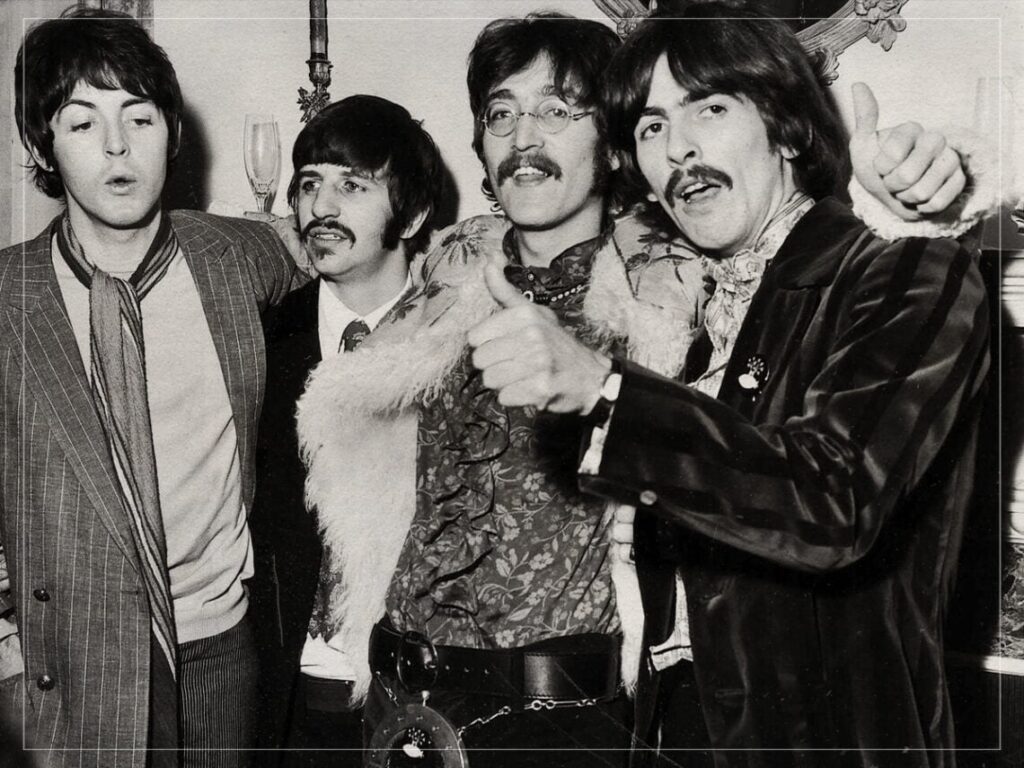
There are a few aspects that contribute to the conceptual nature of The Beatles’ Sgt Pepper’s Lonely Hearts Club Band. The first is the narrative, which promotes the idea that The Beatles are singing as a fictional band, and the cover art displays an image of said fictional band. The other aspect is the ambitious orchestral sounds that link each track on the album, and arguably, this wouldn’t exist were it not for Pet Sounds.
Paul McCartney never held back when admitting how much of a huge influence Pet Sounds was on him when writing Sgt Pepper’s. “I played it to John so much that it would be difficult for him to escape the influence. If records had a director within a band, I sort of directed [Sgt. Pepper’s Lonely Hearts Club Band] and my influence was basically the Pet Sounds album. John was influenced by it, perhaps not as much as me,” he said, “It was certainly a record we all played—it was the record of the time, you know? I’ve often played Pet Sounds and cried. It’s that kind of an album for me.”
It’s hard to say definitively whether or not The Beatles would have had a similar career were it not for Pet Sounds; however, it’s hard to deny how intrinsically linked the band and the album seem to be. It’s safe to assume that without the friendly rivalry that existed between The Beatles and The Beach Boys, we wouldn’t have gotten either of their best works, and their legacies could be very different.
[embedded content]
Related Topics