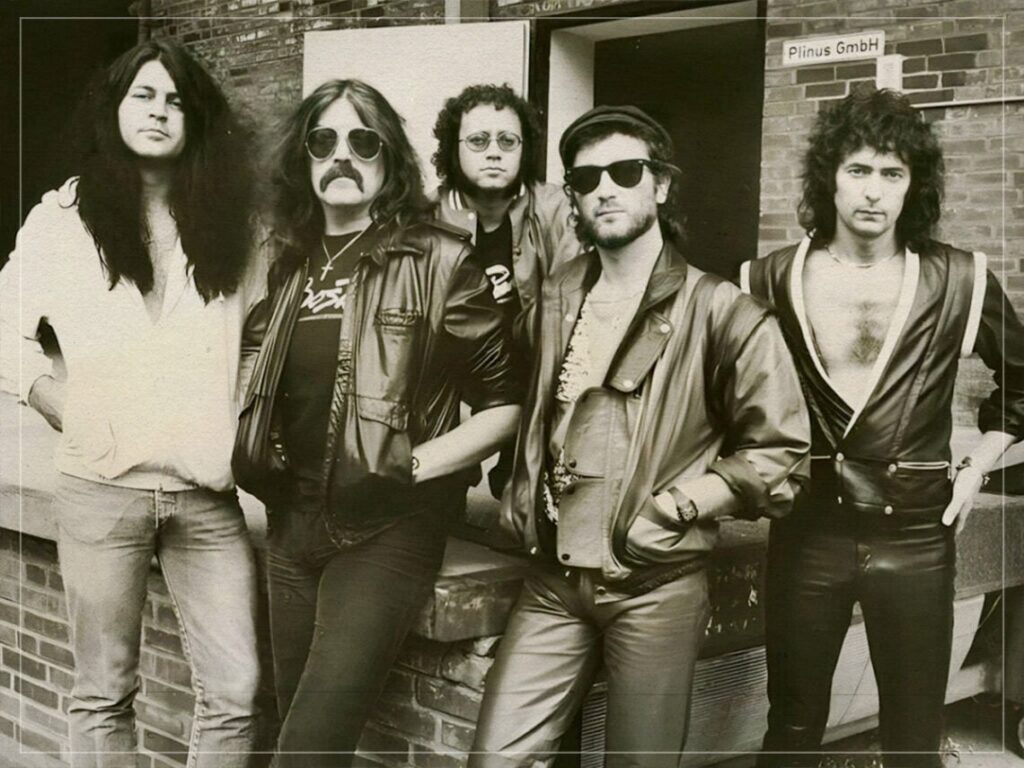
“A new structure”: Glenn Hughes on early Deep Purple trepidation
 Posted On
(Credits: Far Out / Alamy)
Replacing anyone in a band is putting a musician in a bad position before they’ve even played a note. No one had even heard what they had to offer the group, but the minute fans see them in concert or pick up their record, they’re already judging them for not being the core member that they already know and love. It’s hard for anyone to accept that position, but even when being welcomed into a band like Deep Purple with open arms, any musician needed to figure out what they were getting themselves into.
Then again, Purple’s sound has always been dictated by the people who had been working with them. Although Ritchie Blackmore and Jon Lord served as the glue throughout their glory years, some of the best moments in their history came from who they had at the front of the stage. They could jam as much as they wanted to, but once they replaced Nick Simper and Rod Evans with Roger Glover and Ian Gillan, things started to change when fans heard that screech of ‘Highway Star’.
Even with the multiple albums that have come and gone since the 1970s, Machine Head is still considered one of their crowning achievements because of how well they were working off each other. However, whereas they could keep things professional when they entered the studio, Gillan and Blackmore began to clash after working on Who Do You Think We Are, leading to them axing both Gillan and Glover.
While this would have been the hard rock equivalent of losing Mick Jagger for many people, they had an ace up their sleeve with David Coverdale. He didn’t have the same screeching style that Gillan had, but when they brought in Glenn Hughes from Trapeze to sing backup, they had a great counterbalance to Coverdale’s bluesy baritone. Then again, Hughes wasn’t listening to Purple for their scale exercises.
“I wasn’t completely sold on the type of music that I was about to play. But knowing David was coming in with me, there would be a possibly new structure in terms of writing and singing.”
Glenn Hughes
Compared to every other band tearing up the hard rock scene, Deep Purple wasn’t afraid to stretch out, which wasn’t always Hughes’s favourite thing in the world. There were certainly elements of his own songs that had intricate parts to them, but when listening to them live for the first time, the idea of joining them wasn’t exactly something that he wanted to entertain for too long.
According to Hughes, it was Coverdale who swayed his decision to actually join the group, saying, “I saw them at the peak of Machine Head. I thought they were very interesting, very unique and a one-off band. So when the call came for me to join them, I wasn’t completely sold on the type of music that I was about to play. But knowing David was coming in with me, there would be a possibly new structure in terms of writing and singing. I wasn’t trying to derail the essence that was Purple, but Purple were changing rapidly.”
And listening to Burn right next to an album like In Rock really tells you everything you need to know. The band were certainly different, but that wasn’t a bad thing at all, with Hughes’s screech meshing perfectly with Coverdale’s husky lower register, almost sounding like something that would come out of the world of R&B had a band like Sly and The Family Stone been gifted with some of the heaviest guitar licks imaginable.
Some fans may have been disappointed to see the technical side of the band get lost in the mix, but Purple adapted to the times the same way that people like Led Zeppelin and Black Sabbath did. They established their sound on their first run of albums, and now it was time for them to start looking elsewhere for new influences.
[embedded content]
Related Topics